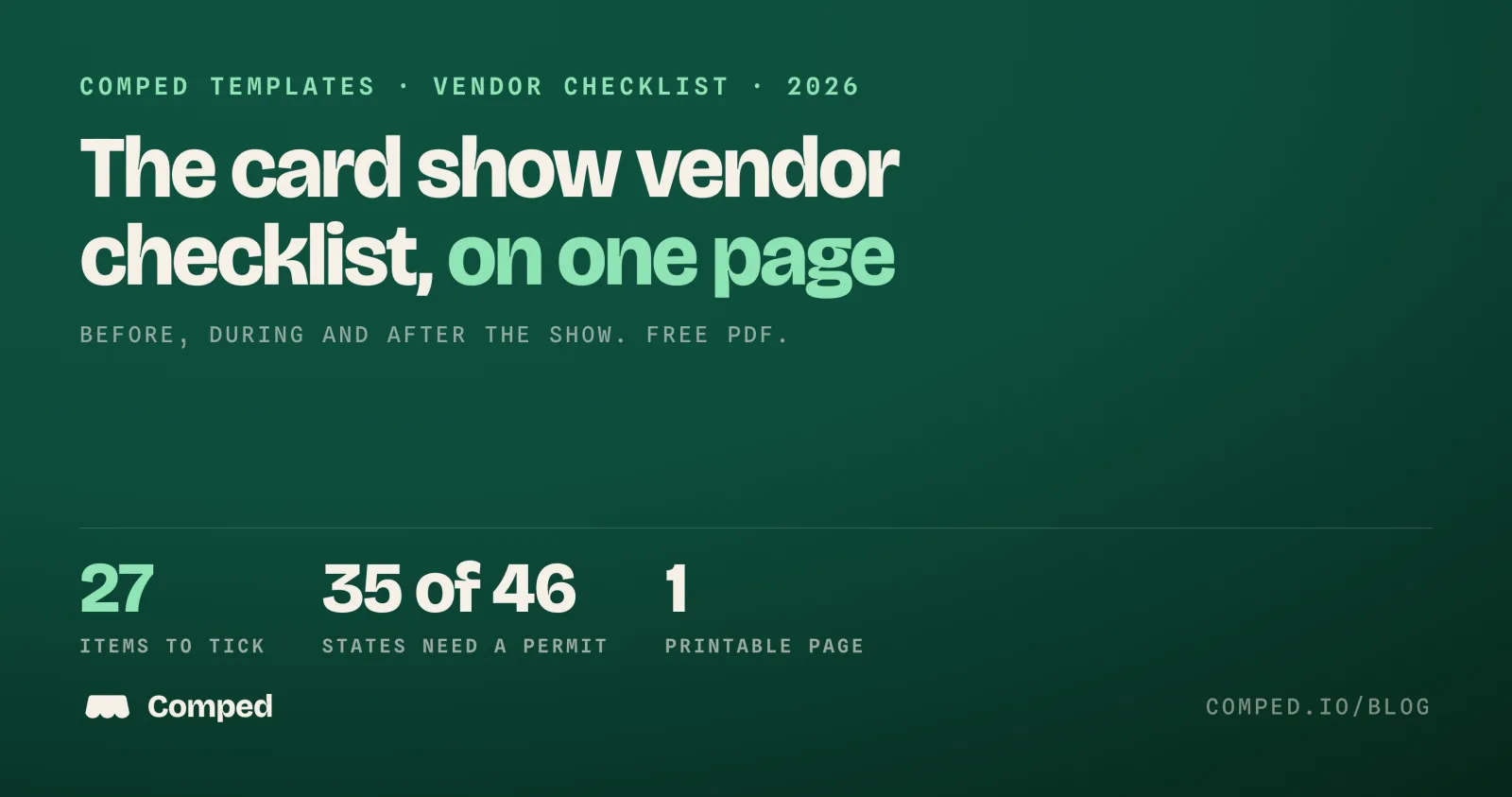
What the checklist looks like
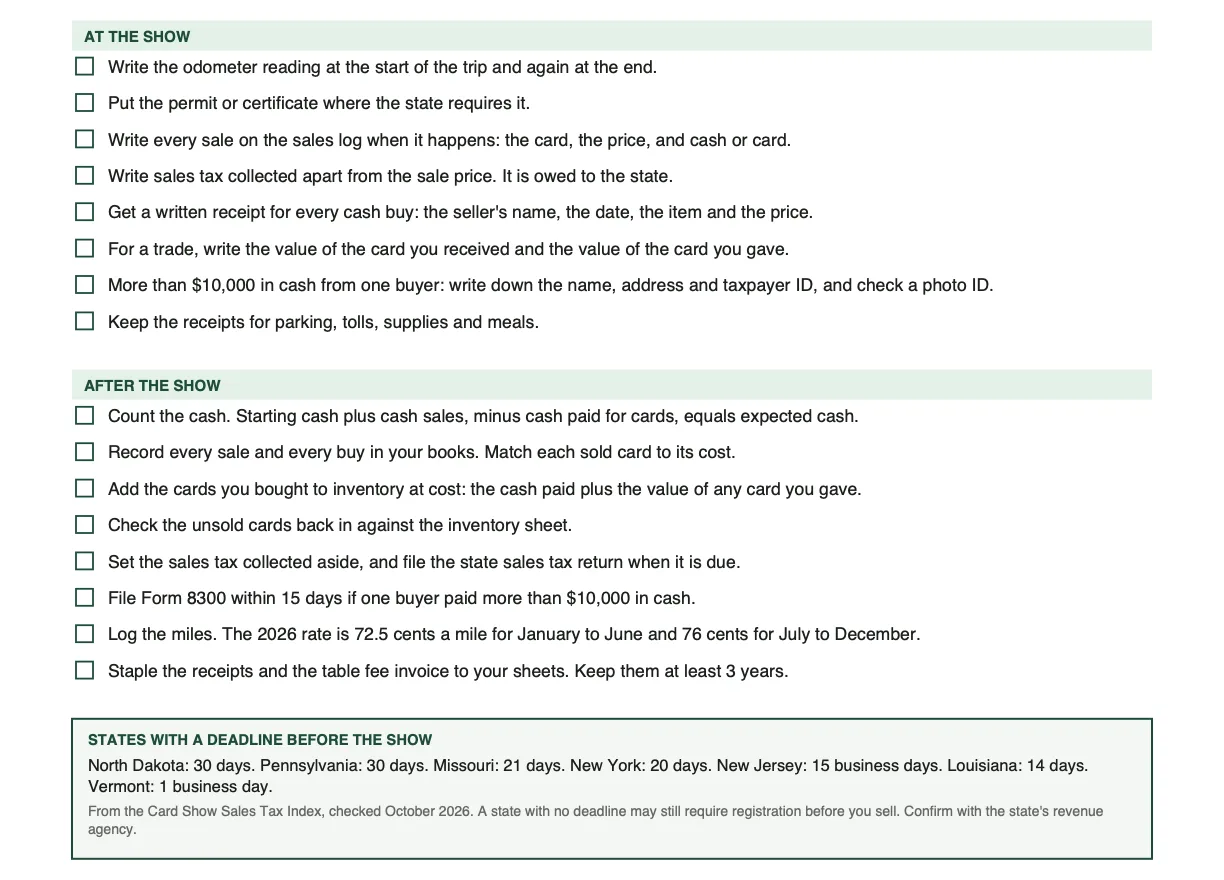
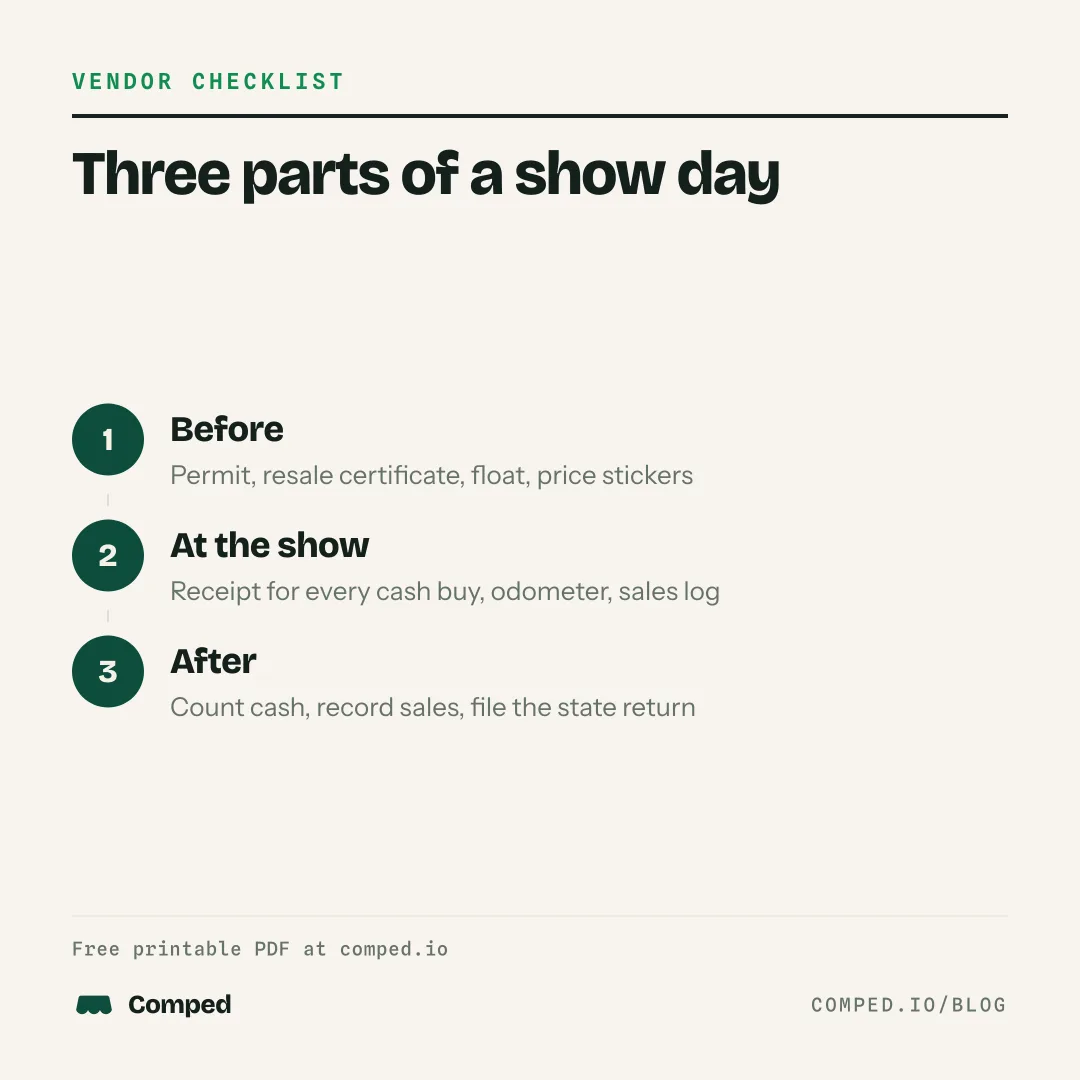
The PDF is one page with a tick box beside each of the 27 items, in three blocks: before, at and after the show. This is the lower part of the printed page, with the state deadline box at the bottom.
Most vendor checklists online are packing lists. This one is the paperwork and money list, because those are the items that cost real money when missed. The packing list is further down this page.
The timeline
Work back from the show date. The longest lead time is the state's registration deadline, which can be 30 days.
| When | What to do |
|---|---|
| The day you book the table | Look up the state's permit rule and deadline. Pay the table fee and save the receipt. Ask the promoter the questions below. |
| The week before | Price and sticker every card. Fill in the inventory sheet with cost and lowest price. Check supplies. Get small bills from the bank. |
| The night before | Print the sheets. Charge the phone, the card reader and a power bank. Count the float. Load the car, cards last. |
| Load-in | Write the odometer. Set up the table. Put the permit where the state requires it. Run one test payment if you take cards. |
| The close | Count the cash, total the sheets, write the odometer, collect every receipt. |
| That week | Record sales and buys in your books. Set the sales tax aside. File Form 8300 if it applies. |
Before the show
The work before a show is paperwork first and packing second. Eleven items on the checklist happen before you leave home.
- Look up the show's state in the card show sales tax index.
- Register for that state's sales tax permit or certificate if it requires one.
- Meet the state's deadline before the show, if it has one.
- Pack the permit or certificate.
- Pack resale certificate forms if you plan to buy inventory from dealers.
- Write down the sales tax rate at the venue: the state rate plus any local rate.
- Pay the table fee and save the invoice or receipt.
- Count the cash float and write the starting amount on your sales log.
- Put a price sticker on every card. Keep your cost and lowest price on the inventory sheet.
- Print the inventory sheet and the sales log. Pack a receipt book.
- Pack supplies.
The card show inventory sheet is the page to print for the cost and lowest price of each card. A resale certificate lets a dealer buy inventory without paying sales tax, and the dealer then charges tax when the card sells at retail.
The permit and the deadline
Most states want a vendor registered before the first sale, and a few set a deadline days or weeks ahead. In the index, 35 of the 46 states with a sales tax require registration before a single show, and it is free in 21 of them. In the other 11 an occasional vendor can sell at one show without registering first, within limits, and still owes the tax.
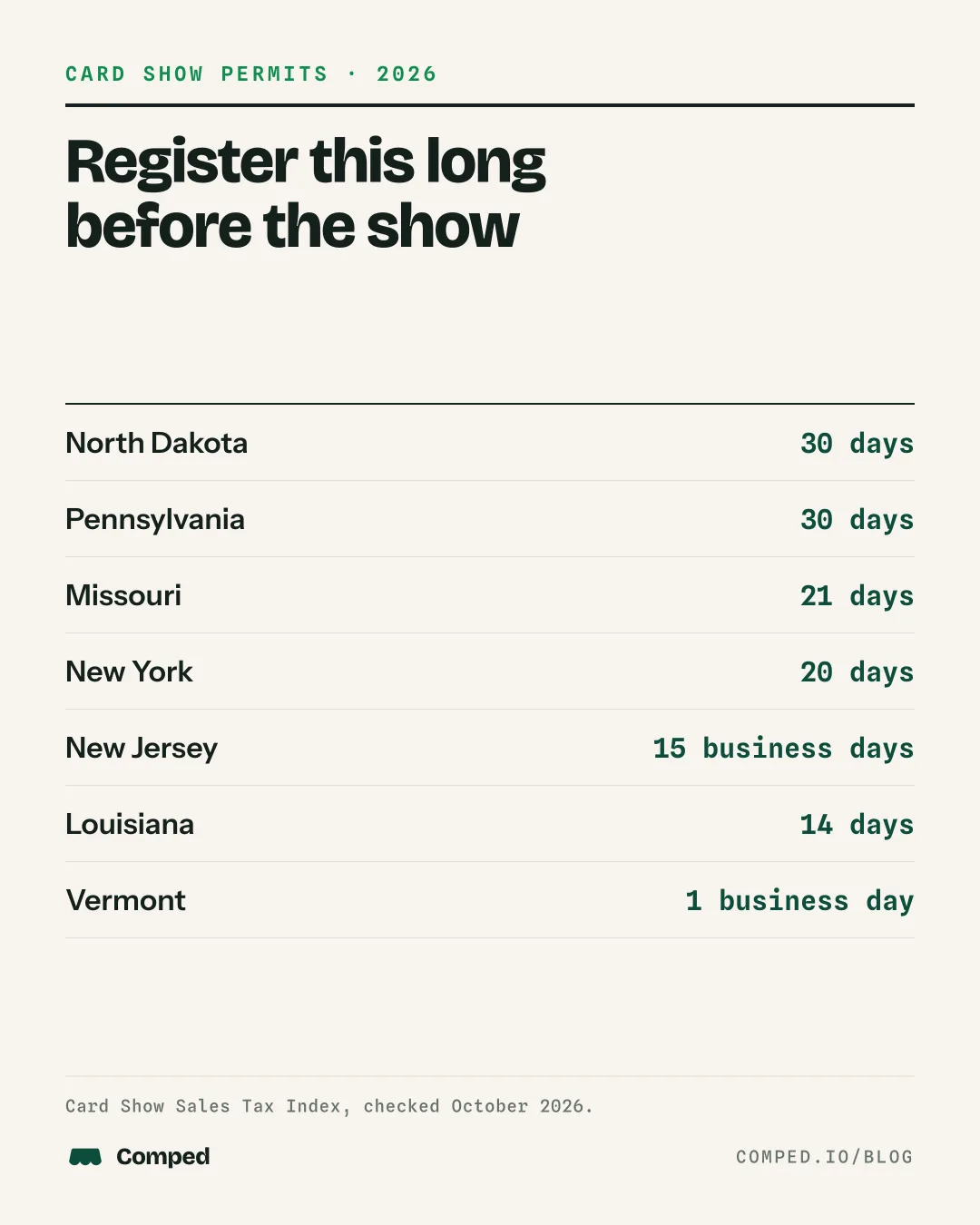
Seven states publish a deadline before the show. Put it on the calendar the day you book the table.
| State | Register or give notice before the show |
|---|---|
| North Dakota | 30 days |
| Pennsylvania | 30 days |
| Missouri | 21 days |
| New York | 20 days |
| New Jersey | 15 business days |
| Louisiana | 14 days |
| Vermont | 1 business day |
These come from the index, checked October 2026. A state with no deadline may still require registration before you sell, so confirm with the state's revenue agency. The state by state guide has the form names.
The rules apply to visitors too. New Jersey treats anyone selling at a flea market, craft show or trade show as a vendor, including out-of-state and one-time sellers, and requires the Certificate of Authority on display.
Showing up at an out-of-state show does not exempt you from that state's rules. The rule that applies is the rule of the state where the table is. There are full guides for Texas, Florida and California, among others.
What to ask the promoter
Eight answers decide what you pack. Get them in writing when you book.
- How long and how deep is the table, and are chairs included?
- Is a table cover provided, or do you bring one?
- When does vendor load-in open and close, and where do vendors park?
- Is there electricity at the table, and does it cost extra?
- Is there Wi-Fi or a phone signal in the hall?
- Does the promoter need your sales tax permit number before the show?
- Is the hall locked overnight for a two day show, and who is responsible for cards left in it?
- What is the refund rule if you cancel?
At the show
At the table, the job is to write each deal down when it happens. Eight items cover the day.
- Write the odometer reading at the start of the trip and again at the end.
- Put the permit or certificate where the state requires it.
- Write every sale on the sales log: the card, the price, and cash or card.
- Write sales tax collected apart from the sale price. It is owed to the state.
- Get a written receipt for every cash buy: the seller's name, the date, the item and the price.
- For a trade, write the value of the card you received and the value of the card you gave.
- For more than $10,000 in cash from one buyer, write down the name, address and taxpayer ID, and check a photo ID.
- Keep the receipts for parking, tolls, supplies and meals.
The receipt matters because nothing else proves a cash buy. IRS Publication 583 lists the documents that support a purchase, and a written receipt with those four facts is the show version. The card show cash and trade log is a printable sales log with a row per deal.
The $10,000 line is Form 8300. A business that receives more than $10,000 in cash from one buyer files it within 15 days, gives the buyer a written statement by January 31 of the next year, and keeps a copy for 5 years. Never split a payment to stay under the line. The Form 8300 guide for card dealers has the details.
Comped records the card, the price, the venue and the date when you scan a buy at the table, with your photo of the card.
After the show
Close the day before the details fade. Eight items finish the checklist.
- Count the cash. Starting cash plus cash sales, minus cash paid for cards, equals expected cash.
- Record every sale and every buy in your books. Match each sold card to its cost.
- Add the cards you bought to inventory at cost: the cash paid plus the value of any card you gave.
- Check the unsold cards back in against the inventory sheet.
- Set the sales tax collected aside, and file the state sales tax return when it is due.
- File Form 8300 within 15 days if one buyer paid more than $10,000 in cash.
- Log the miles.
- Staple the receipts and the table fee invoice to your sheets. Keep them at least 3 years.
THE 2026 MILEAGE RATE
The standard mileage rate changed in the middle of 2026, so the date of the show decides the rate.
The rates are on the IRS standard mileage rates page. Table fees, supplies and travel are covered in the write-off guide.
Sales tax returns follow the state's schedule, not the show's. New Jersey's quarterly return, form ST-50, is due the 20th of the month after the quarter ends. The card show vendor tax checklist covers what to hand a preparer at year end.
What to bring
The supplies line on the checklist is one line. This is the full packing list behind it. None of it is required by law, and a first table needs less than you think. Edit the CSV to match your own table.
| Group | Items |
|---|---|
| Paperwork | Permit or certificate, resale certificate forms, table fee receipt, inventory sheet, sales log, receipt book, photo ID |
| Money | Counted cash float in small bills, a cash box or a zip pouch you keep on you, a card reader if you take cards, printed QR codes for the payment apps you accept |
| Display | Table cover, showcases or display cases, card stands and risers, a light, price stickers, a sign for what you buy and sell |
| Card supplies | Penny sleeves, top loaders, team bags, graded card sleeves, small bags for buyers, an empty storage box for cards you buy |
| Power and phone | Phone charger, power bank, extension cord and power strip if the table has electricity |
| Tools | Pens, a marker, tape, scissors, a calculator, a notepad, spare price stickers |
| Getting there | A cart or dolly, bins that close, directions, parking money |
| The long day | Water, food, layers, a seat cushion |
Binders or cases? Use both for different jobs. Cases keep hands off the cards that are worth the most and let buyers see them from the aisle. Binders and boxes hold the cards people want to flip through. Put the expensive cards where you can see them from your chair.
Keep your cards in sight for the whole show. If you work alone, ask the vendor beside you to watch the table before you step away, and cover or lock the cases. Carry the cards with you; do not check them as luggage.
New to shows? How to become a card show vendor covers the steps before your first table, and how to price cards for a card show covers the stickers.
The cash float and taking payment
Size the float from your prices, not from a rule of thumb. We found no sourced figure for card shows. If your stickers end in 0 or 5, you need fives, tens and twenties, and almost no singles. If you run a dollar box, bring singles.
A way to work it out: assume your first five cash buyers each hand you a $100 bill for your most common price. For $40 cards, that is five lots of $60 in change, or $300 in tens and twenties. That is an example, not a recommendation.
Buying takes far more cash than making change. Cash you bring to buy cards is not float. Count it apart and write both starting amounts on the log, so the close-out still adds up.
Decide before the show which payments you take, and post them. Record every sale the same way whatever the method. A payment app or card reader may send a Form 1099-K; cash never does, and both are income.
What a show costs
The table fee is the smallest surprise. Travel, a hotel, food and supplies often add up to more. Add them before you book, then work out the sales you need to cover them.
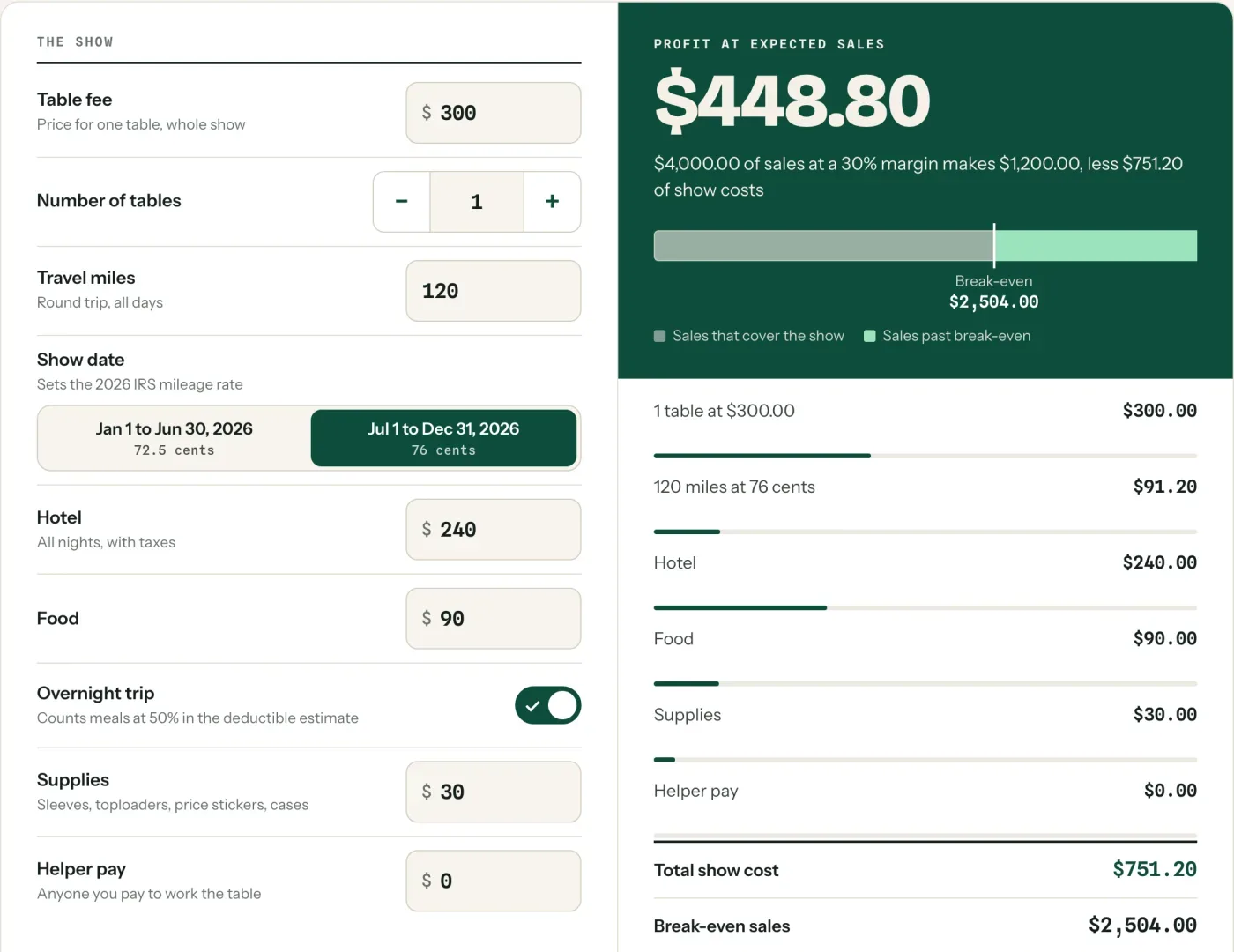
The card show profit calculator does this with your own numbers. If you plan to buy at the show, the buy percentage calculator turns a comp into an offer.
First show mistakes
These six are the ones that cost money, and each has a line on the checklist.
| Mistake | What it costs | Checklist line |
|---|---|---|
| Booking a table inside the state's registration deadline | Selling without the permit. New York's penalty is up to $500 for the first day and $200 for each day after, to a $10,000 maximum. | Meet the state's deadline |
| Unpriced cards | Every sale turns into a lookup while the buyer waits | A price sticker on every card |
| No cost on the sheet | You cannot tell a good offer from a loss | Cost and lowest price on the inventory sheet |
| Cash buys with no receipt | No proof of cost when the card sells | A written receipt for every cash buy |
| Sales tax mixed into sales | You spend money that belongs to the state | Write sales tax apart |
| No odometer reading | The mileage deduction has no record behind it | Odometer at the start and end |
The New York figure is from the state's registration bulletin. Other states set their own penalties.
How this looks in the Comped app
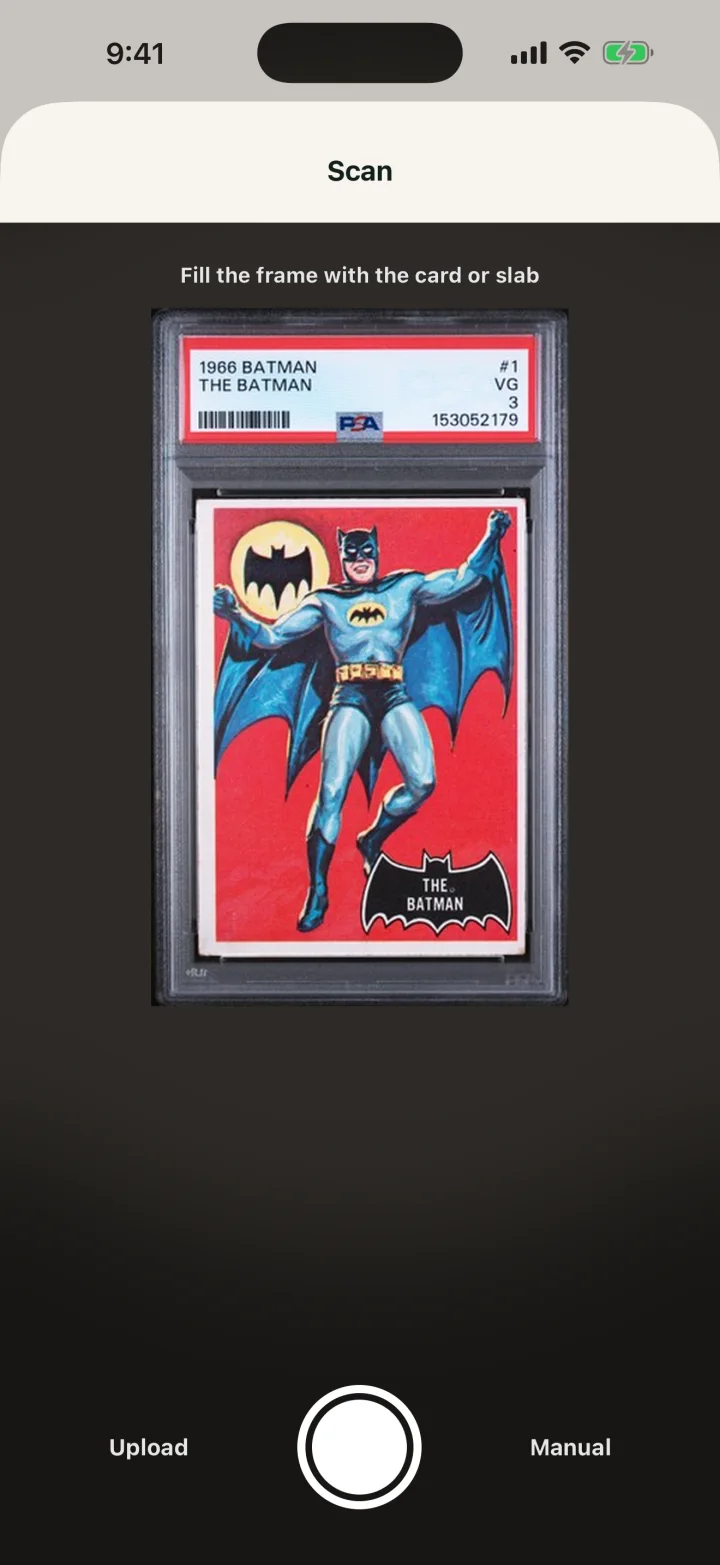
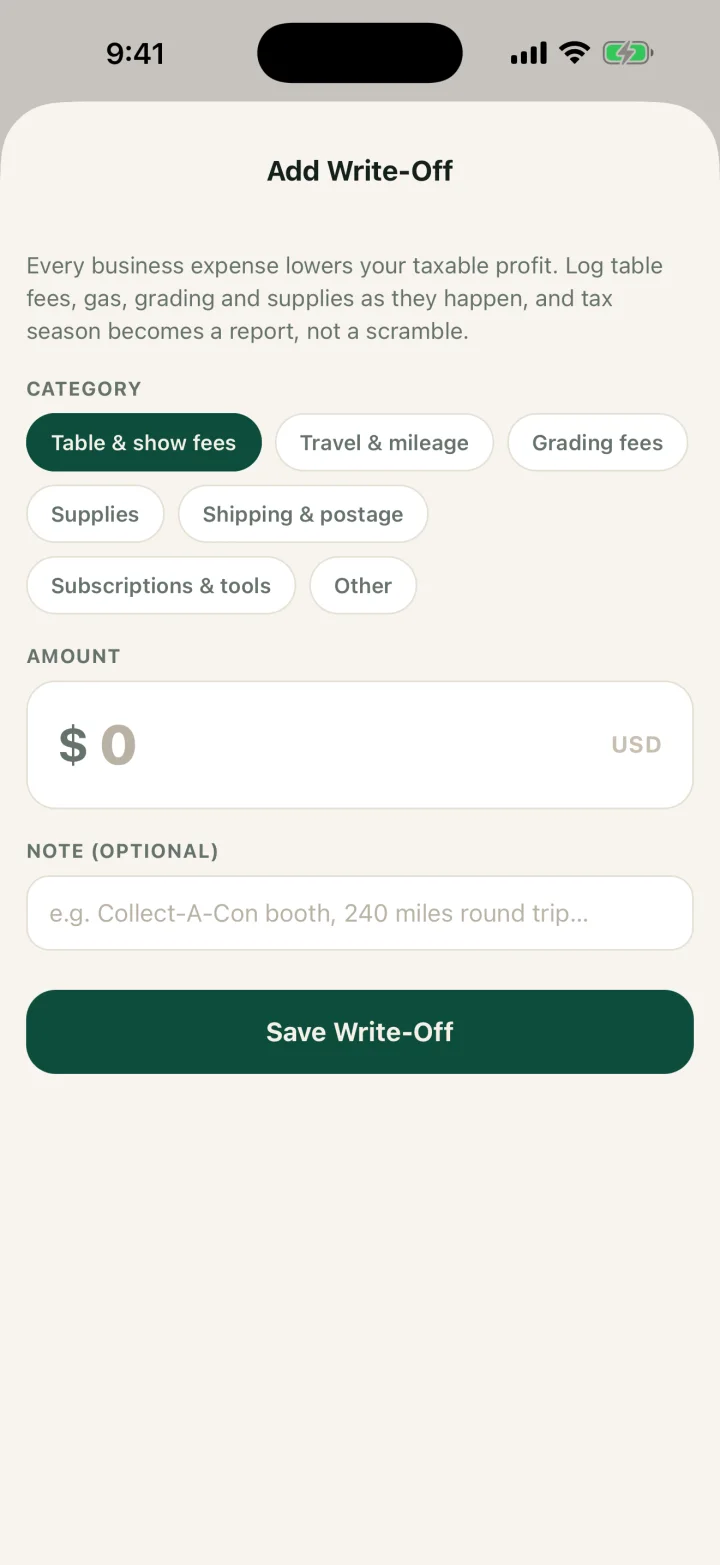
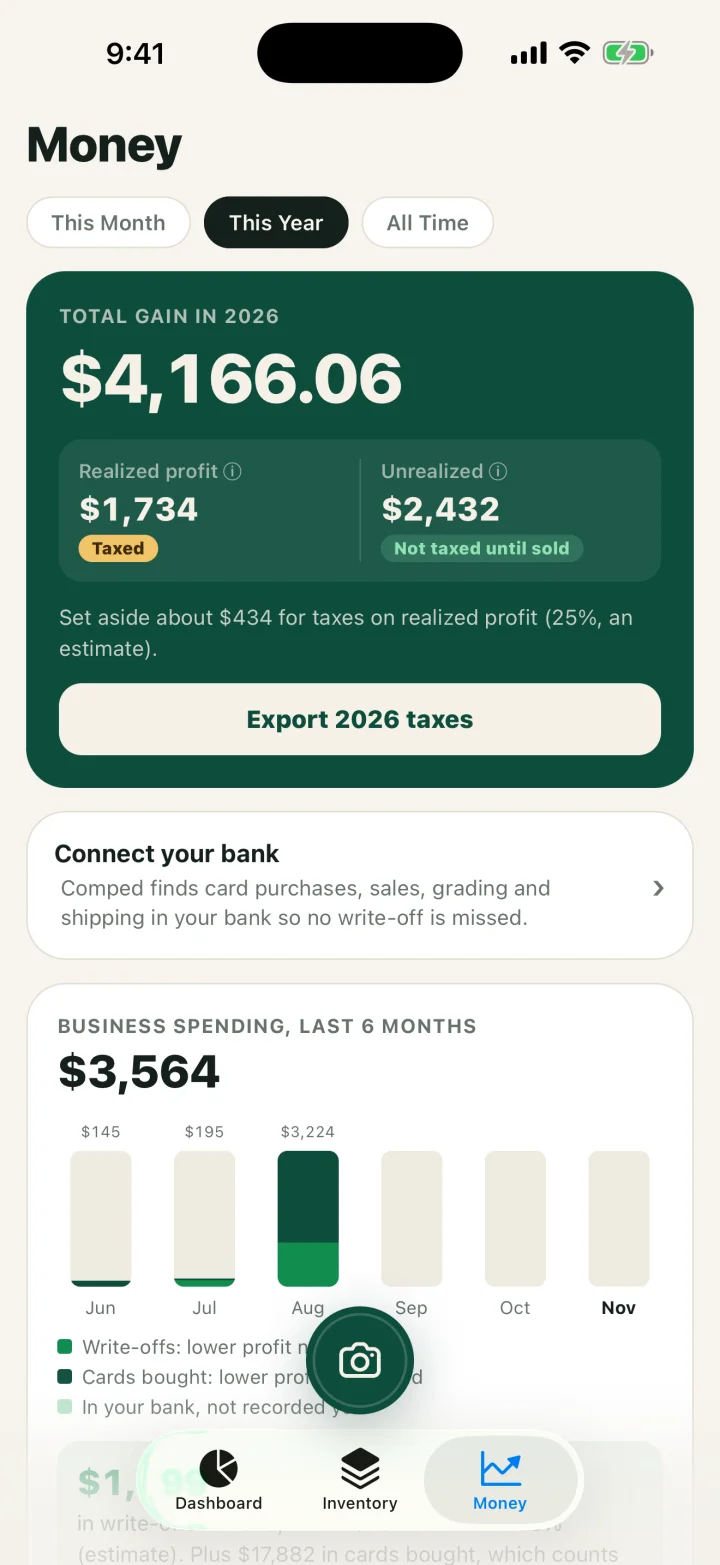
These are captures of the current app with demo data. A buy at the table starts with a scan of the card. The table fee and the drive go in as write-offs under Table and show fees and Travel and mileage, with mileage typed as an amount. After the show, the Money tab shows realized profit and what to set aside.
Related guides
- State by State: Sales Tax and Show Permits for Card Vendors: the permit and form for every state.
- Card show inventory sheet: cost, sticker price and lowest price for every card you bring.
- Card show cash and trade log: a row for every deal at the table.
FAQ
Do I need a permit to sell at a single card show?
In most states, yes. In the Card Show Sales Tax Index, 35 of the 46 states with a sales tax require a vendor to register before selling at even one show. Registration is free in 21 of them. The other 11 give an occasional vendor another route, with limits. Check the state where the show is held.
I travel to shows in other states, do their rules apply to me?
Generally yes. Check the state where the show is held, not your home state. New Jersey, for example, treats out-of-state and one-time sellers as vendors who must register.
Does the promoter collect it for me?
Usually not. Sales tax on your table sales is your own job in most states. Four states have the promoter collect an occasional vendor's tax, and the index and the state guide show which ones.
What should a card show vendor bring?
Your permit or certificate, a counted cash float, priced cards, an inventory sheet, a sales log and a receipt book. Add sleeves, top loaders, display cases, a table cover, pens, a phone charger and a power bank.
How much change should I bring to a card show?
Enough to break large bills at your most common prices for the first several sales. There is no standard figure. Work it out from your stickers, bring the bill sizes those prices need, and keep buying money counted apart from the float.
Should I use binders or display cases on my table?
Both. Cases protect the most valuable cards and show them from the aisle. Binders and boxes suit lower priced cards that buyers want to flip through. Keep the expensive cards where you can see them.
Do I charge sales tax on cash?
Yes, where the sale is taxable. Sales tax depends on the item and the state, not on how the buyer pays. Write the tax apart from the sale price.
Can I buy inventory tax-free with a resale certificate?
Yes, where the state accepts it. A resale certificate lets a dealer buy inventory without paying sales tax, and the dealer charges tax when the card sells at retail. Without one, tax you pay on a purchase is part of the card's cost.
SOURCES
- Vendors and promoters, New Jersey Division of Taxation, checked November 2026.
- Publication 583, Starting a Business and Keeping Records, IRS, checked November 2026.
- Form 8300 and reporting cash payments of over $10,000, IRS, checked November 2026.
- Standard mileage rates, IRS, checked November 2026.
- How long should I keep records, IRS, checked November 2026.
- How to register for New York State sales tax, New York Department of Taxation and Finance, checked November 2026.
- Card Show Sales Tax Index 2026, Comped, dataset checked October 2026.
This is general information for card sellers, not tax or legal advice for your situation. Rules change and states differ; a CPA who knows your numbers wins every time.