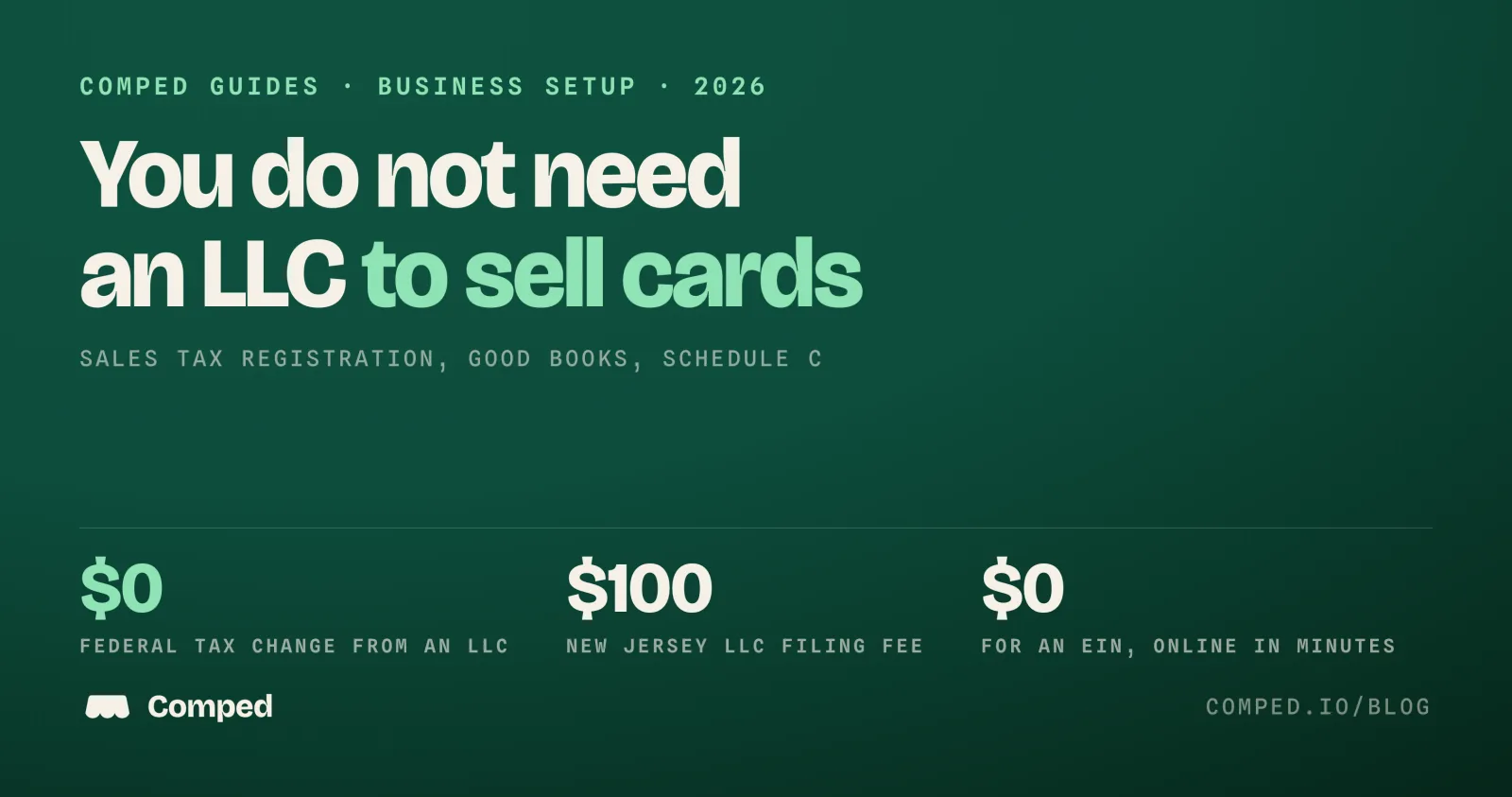
What you need to sell cards legally
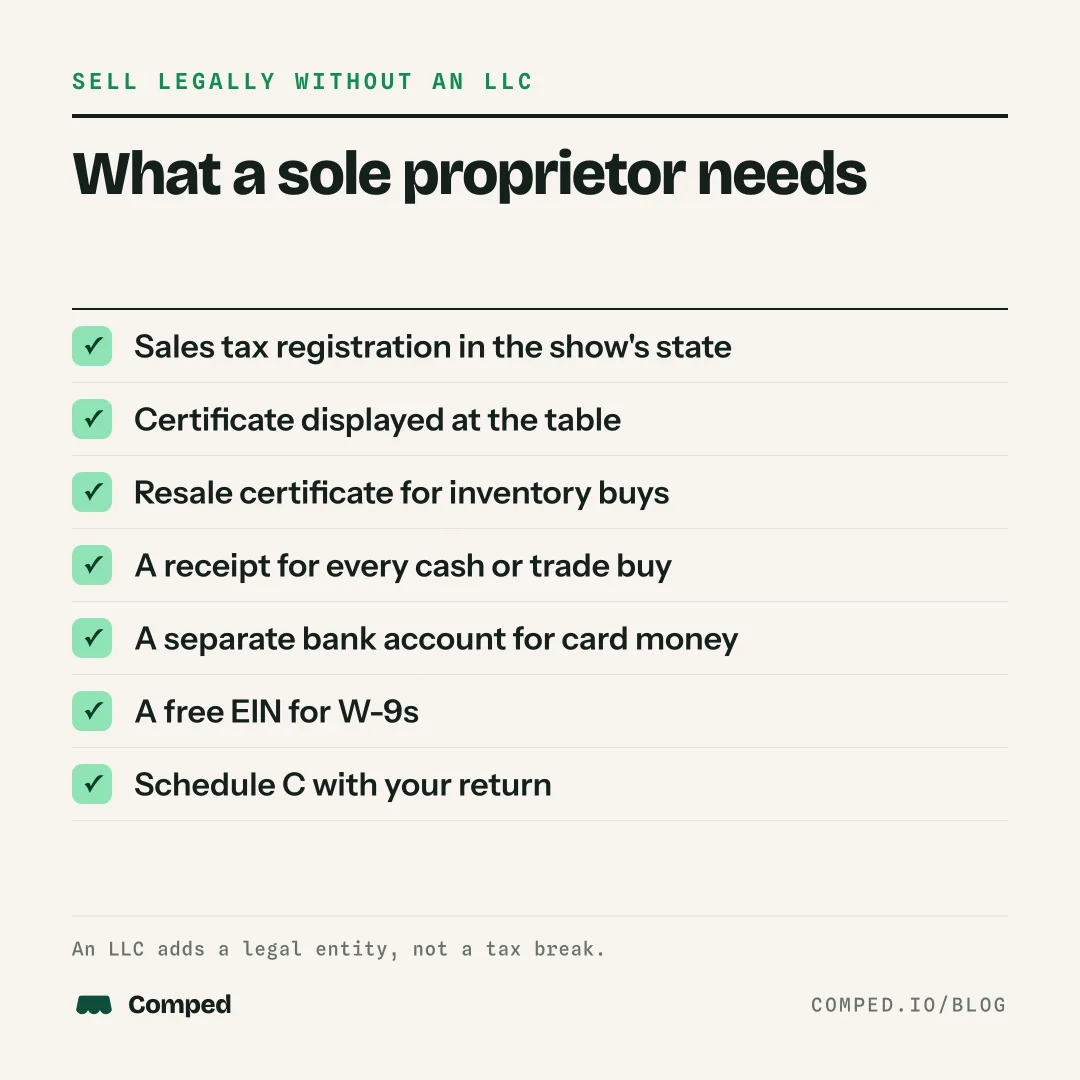
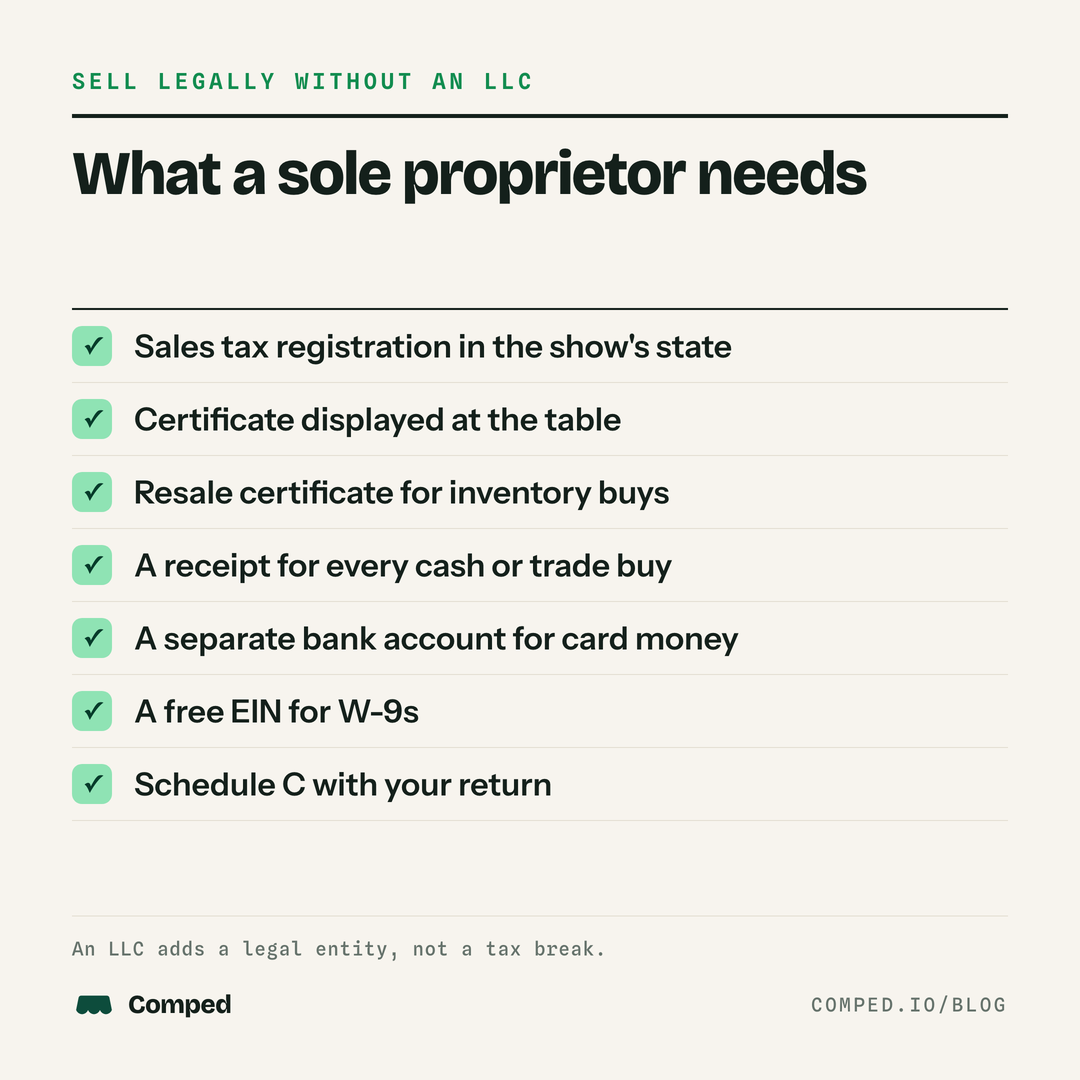
Three things make a sole proprietor legal: a sales tax registration in the show's state, records of every buy and sale, and a Schedule C. None of them is an LLC. The moment you sell a card for profit you are a sole proprietor, with nothing to file to become one.
The registration is the part vendors miss. Our Card Show Sales Tax Index found that 35 of 46 sales tax states require registration before one show, and it is free in 21. In the other 11 an occasional vendor can sell at one show without registering first, through an event return or the promoter, within limits. The states register whoever sells, entity or not. New Jersey, for example, registers anyone selling at a trade show through form NJ-REG at least 15 business days before, as our New Jersey post covers.
Each state has its own form, fee and lead time. We have pages for New York, Pennsylvania, Texas, California and Florida, and the index links the rest.
Federal tax is the same with or without an entity. Profit from selling cards as a business goes on Schedule C, as the master tax guide covers. It pays self-employment tax of 15.3% on net earnings of $400 or more.
Records are what protect you, LLC or not: basis for every card, sales by day and platform, and the costs of each show. Comped keeps each card's cost, each sale and each write-off in one record, which is the separate set of books an LLC depends on.
License, permit, DBA, EIN, LLC
These are five different filings with different offices, and only the first is required to sell at most shows.
| Term | What it is | Who issues it | Needed to sell cards? |
|---|---|---|---|
| Sales tax registration (seller's permit, certificate of authority) | Permission to collect sales tax from buyers | State revenue department | Yes in 35 of 46 sales tax states, before one show |
| Business license | A general licence to operate in a place | City, county or state | Depends on where you live and sell. Ask the city or county clerk |
| DBA (trade name, fictitious name) | The right to trade under a name that is not your own | State or county | Only if you use a name other than your own |
| EIN | A federal tax number for a business | IRS, free | No for a sole proprietor with no employees. Worth having |
| LLC | A separate legal entity that owns the business | State business registry | No |
No federal licence covers trading cards. The SBA's list of federally licensed activities covers things like alcohol, firearms and transportation, and reselling cards is not on it. The same page says state and local rules vary and tells you to research your own state, county and city.
A DBA is not an LLC. The SBA says a DBA lets you trade under a different name and gives no legal protection by itself. Pennsylvania charges $70 to register a fictitious name, on its Department of State fee page. Our guide on how to become a card show vendor puts these filings in order.
Sole proprietor, LLC or S corporation
An LLC changes who signs the contract and who owns the bank account, not what the IRS collects. The IRS says a single-member LLC is disregarded as separate from its owner for income tax. Its sales go on the owner's Schedule C, taxed as a sole proprietor's are. Only an S corporation election changes the tax, and it brings payroll with it.
| Question | Sole proprietor | Single-member LLC | LLC taxed as an S corporation |
|---|---|---|---|
| How it starts | Automatic when you sell | Formation filing with the state | LLC first, then IRS Form 2553 |
| Federal income tax | Schedule C with Form 1040 | Same Schedule C | Separate Form 1120-S, plus your 1040 |
| Tax on profit | 15.3% self-employment tax on net earnings | Same | Payroll tax on a reasonable salary; the rest is distributions |
| Payroll filings | None without employees | None without employees | Forms 941 and 940, and a W-2 for yourself |
| Liability | You are the business | Separate entity, if books and money are kept separate | Same as the LLC |
| Bank account | Personal account allowed; a separate one is wise | Account in the LLC's name | Account in the LLC's name |
| Sales tax registration | Required where you sell | Required where you sell | Required where you sell |
| State cost | $0 | Roughly $50 to $500 by state, plus any annual report fee | The LLC's costs, plus payroll and a second return |
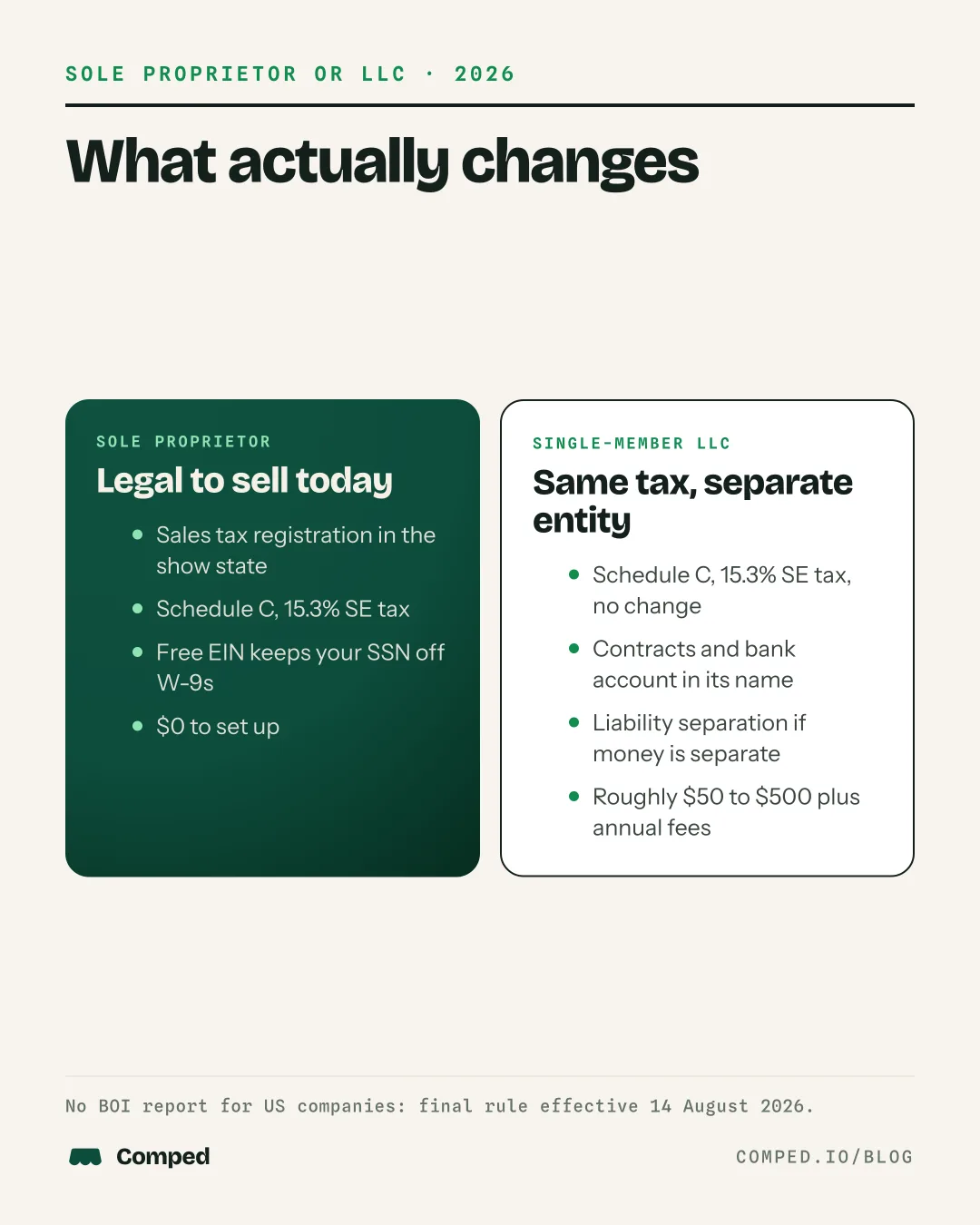
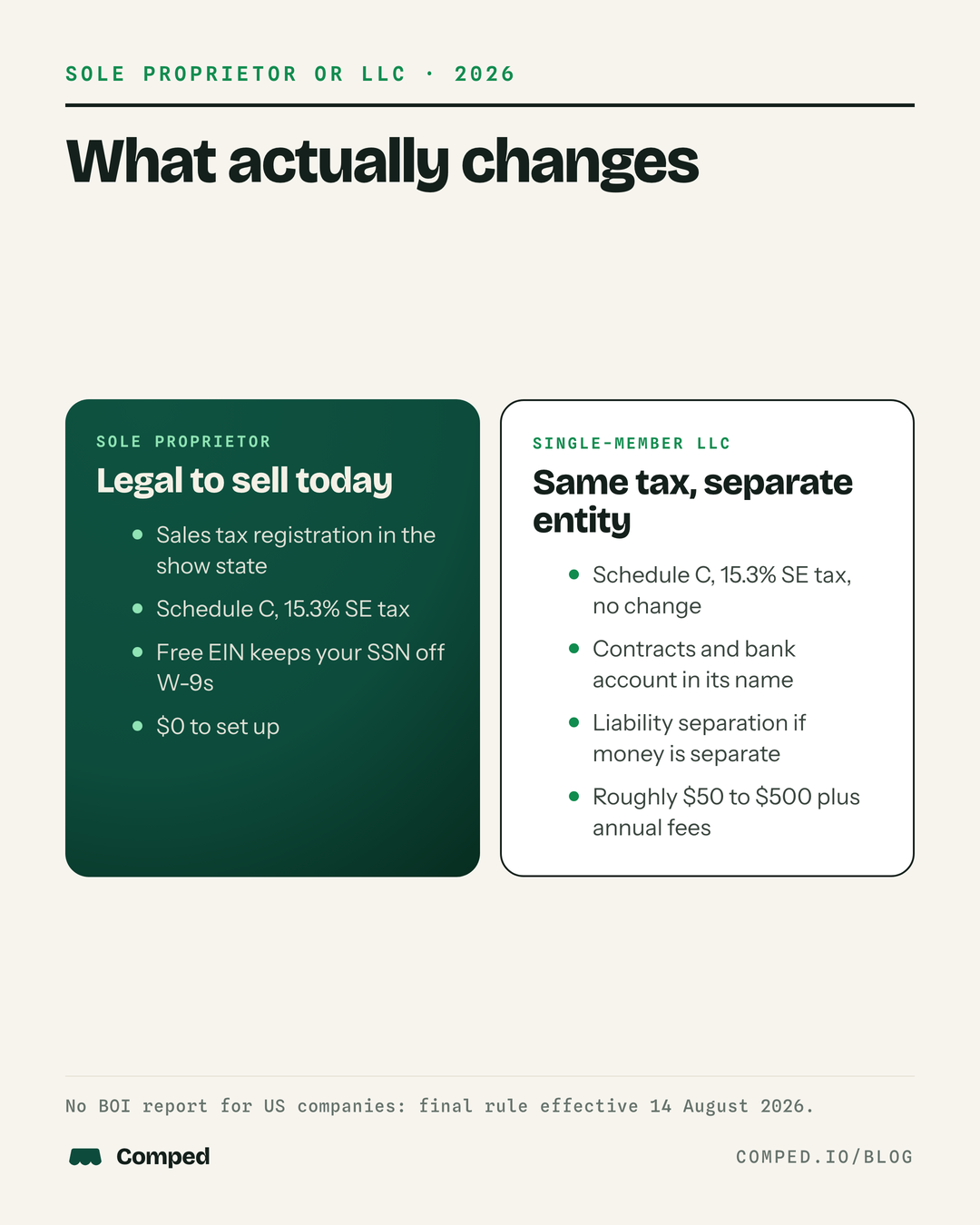
Run one deal through the card sale tax calculator. The answer is the same in the first two columns.
What an LLC protects and what it does not
An LLC separates the business's debts from your personal assets, in most cases. The SBA puts it this way: LLCs protect you from personal liability in most instances. It says a sole proprietor can be held personally liable for the debts of the business.
The separation is real only when the LLC is run as a separate thing. That means its own account, its own records, and no paying the mortgage from the card account. Mix the money and the separation may not hold.
What follows is our reading of the limits, not legal advice. An LLC does not cover a contract you sign in your own name or a debt you personally guarantee. It is not insurance, so it does not replace cards stolen from a table or a car. An attorney in your state can say what it would do for you.
What changes on your tax forms
Almost nothing changes on the return: a single-member LLC files the same Schedule C, with the LLC's name on line C. The Schedule C instructions say the sole member of a domestic LLC files Schedule C unless the LLC elected to be taxed as a corporation.
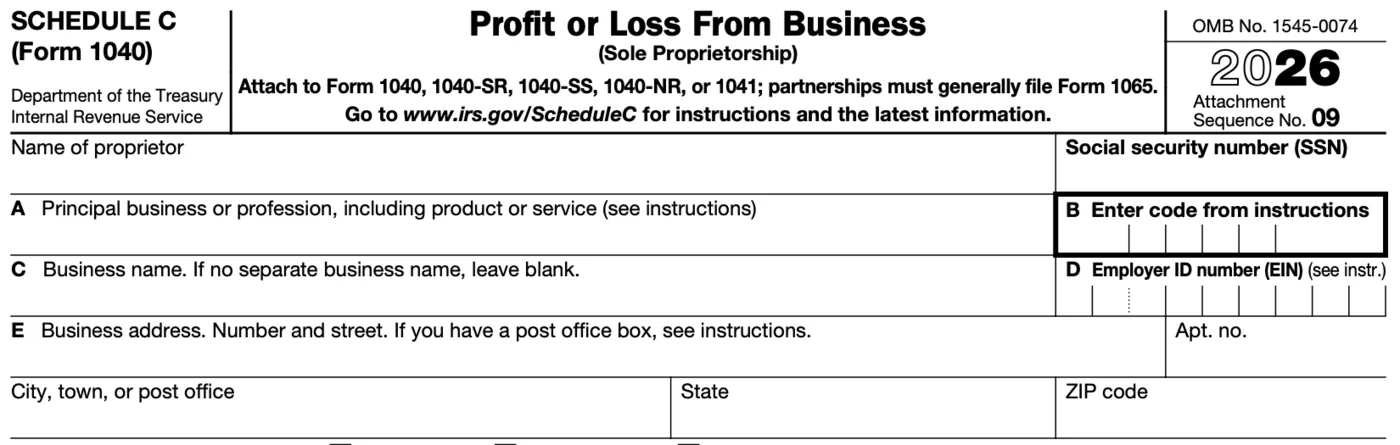
Line D is where people guess wrong. The instructions say to enter an EIN there only if you have one for a retirement plan or for employment or excise returns. That applies to a single-member LLC too. Otherwise line D stays blank and your Social Security number at the top carries the return. The Schedule C business code post covers line B.
The W-9 is the other surprise. When a dealer, a promoter or a platform asks for one, a single-member LLC does not tick the LLC box. Form W-9 (Rev. March 2024) says a disregarded entity puts the owner's name on line 1 and the LLC's name on line 2. On line 3a it ticks the owner's classification, which is "Individual/sole proprietor". The LLC box is for LLCs taxed as a C corporation, S corporation or partnership.
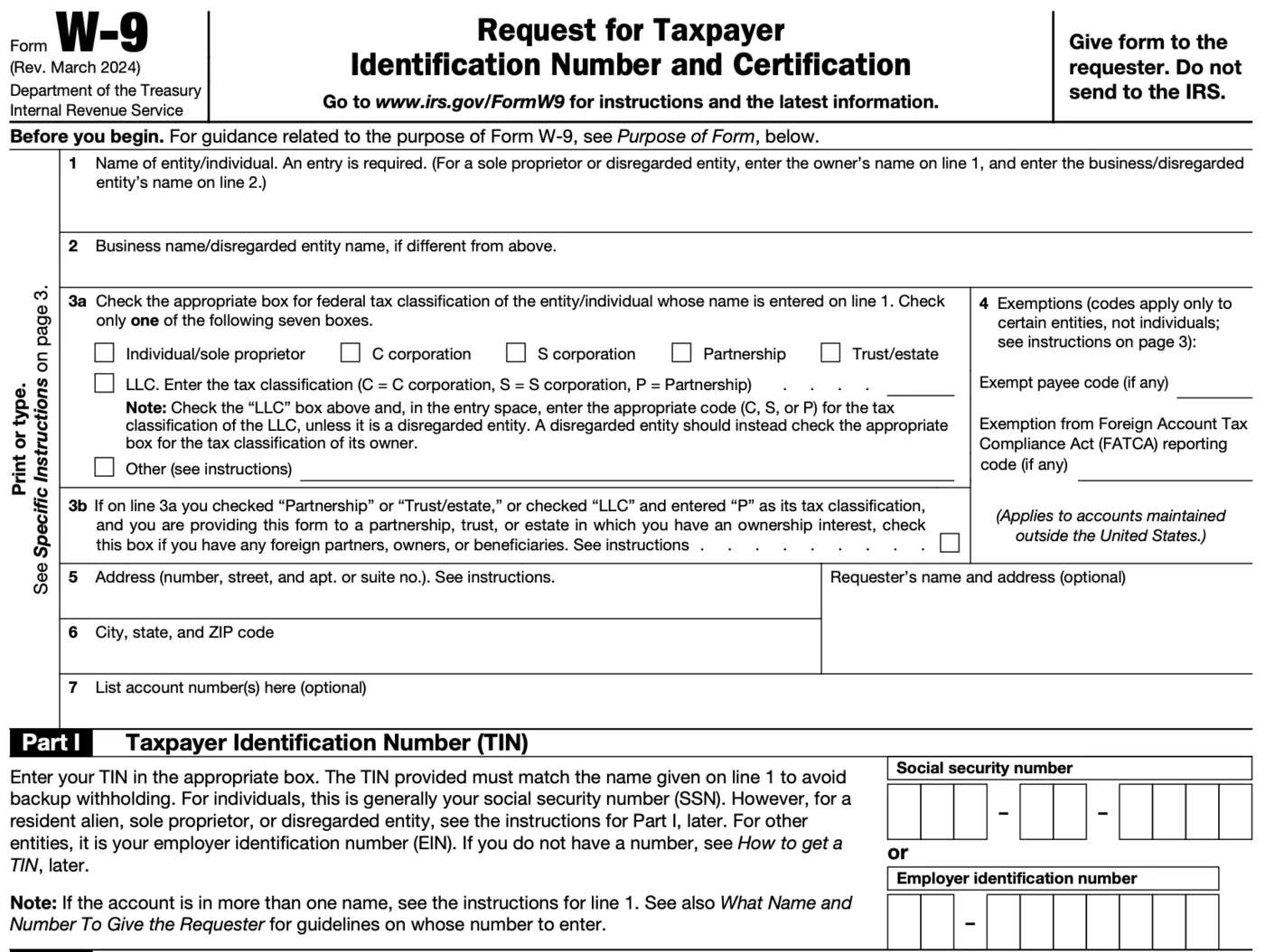
The number in Part I follows the same logic. The form's instructions say a single-member LLC that is disregarded enters the owner's SSN, or the owner's EIN if the owner has one. The IRS single-member LLC page adds: not the LLC's EIN. A sole proprietor with an EIN may enter either number.
The EIN
An EIN is free from the IRS and issued immediately online, as the IRS EIN page says. A sole proprietor with no employees does not need one and can use a Social Security number. Get one anyway.
The reason is the W-9. When a dealer buys a collection from you, or a platform or promoter needs your taxpayer number, the W-9 asks for it. A sole proprietor's EIN goes on that form instead of the SSN, so your SSN stays out of other people's filing cabinets.
The IRS page warns that you never have to pay a fee for an EIN. If you are forming an LLC, the IRS says to form it with the state first, then apply.
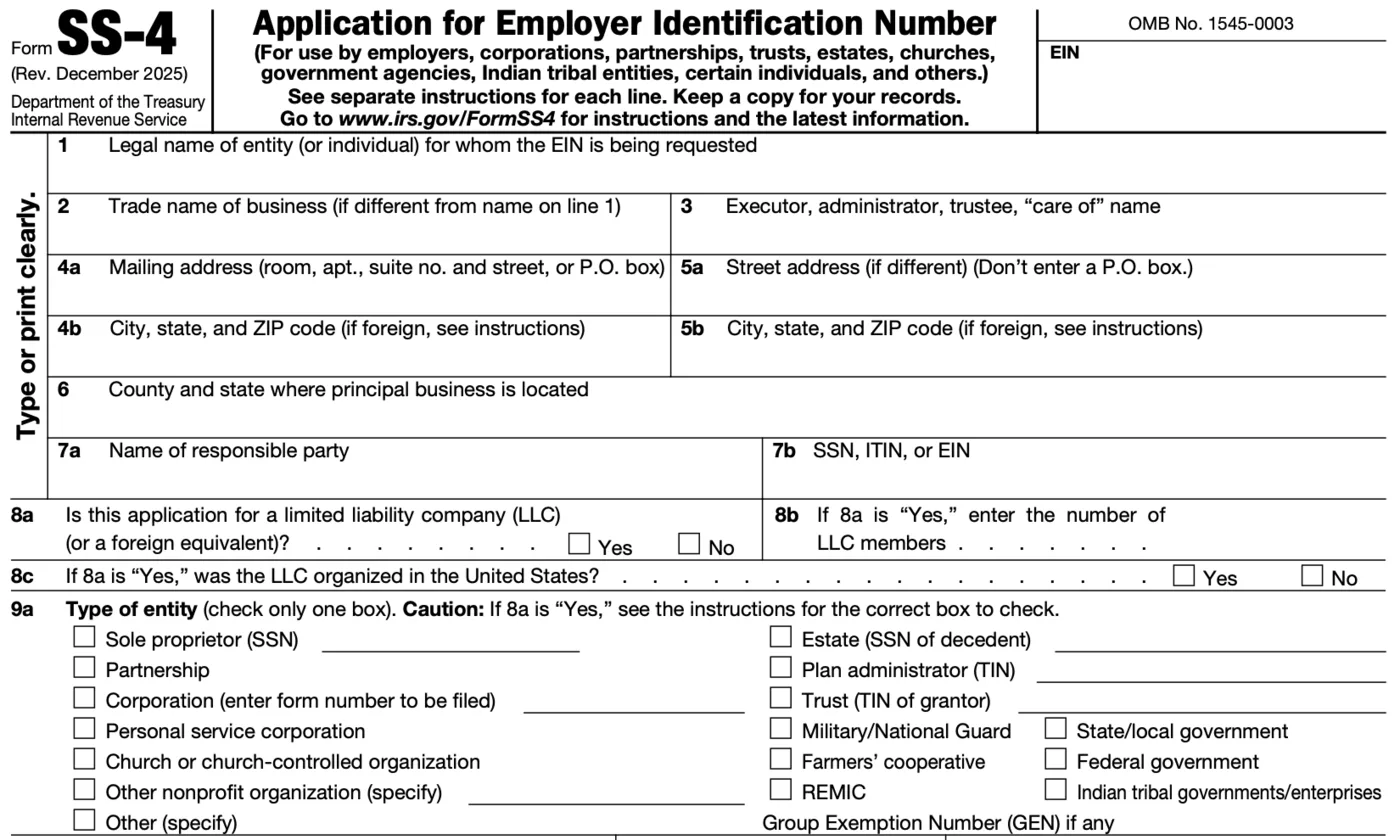
A sole proprietor answers "No" on line 8a and ticks "Sole proprietor" on line 9a. A single-member LLC answers "Yes" on 8a and enters 1 on 8b. The SS-4 instructions then say to tick "Other" on 9a and write "disregarded entity".
When an LLC starts to make sense
An LLC starts to make sense when other parties sign paperwork with you. Contracts with promoters for a run of tables, a lease on a storage unit or shop, and an insurance policy read better in a business name. Helpers are the next trigger. Paying any one helper $2,000 or more in 2026 means a 1099-NEC, as our 1099-NEC post explains, and an entity keeps that relationship off your personal name.
Buying collections is the third. Sellers of a large collection, and their lawyers or executors, often prefer to deal with a business. They want a bill of sale from one and a taxpayer number on the paperwork. A partner is the fourth. Two people sharing inventory and a float need something in writing, and an LLC with an operating agreement is the usual place for it.
Until one of those applies, a sole proprietor with a sales tax certificate, an EIN and a separate bank account is well served.
The S corporation question
An S corporation election can reduce self-employment tax, and it is a different decision from forming an LLC. The 15.3% self-employment tax applies to a sole proprietor's net earnings. An S corporation pays its owner a salary, which carries payroll tax, and the rest comes out as distributions.
The salary is not optional. The IRS says an S corporation must pay reasonable compensation to a shareholder who works in the business before any non-wage distribution.
Against the saving stand the costs. The election is Form 2553. After it come a separate Form 1120-S each year, quarterly Form 941, annual Form 940, and usually a payroll service. The IRS sets no profit figure at which this pays, and the rules of thumb online disagree with each other. Our reading: it is worth a CPA's time once profit is well into five figures, not before. Bring your Schedule C.
Formation costs by state
State filing fees run roughly $50 to $500 depending on the state, plus any annual report fee. These three show states are from their own fee pages, checked November 13, 2026:
| State | Filing fee | Ongoing | Note |
|---|---|---|---|
| New Jersey | $100 | $75 annual report | Division of Revenue fee schedule, certificate of formation |
| New York | $200 | $50 certificate of publication | Articles of organization, plus newspaper publication, see below |
| Pennsylvania | $125 | $7 annual report | Department of State fees, certificate of organization |
New York is the expensive one. A new LLC must publish a copy of its articles, or a notice of its formation, in two newspapers for six consecutive weeks. It then files a certificate of publication with a $50 fee within 120 days. Miss it and the LLC's authority to do business is suspended. The newspaper charges are the real cost, and in some counties they run to $1,000 or more.
AN EXAMPLE, WORKED
A New Jersey vendor forms an LLC and keeps it through three annual reports. This is an example using the state's posted fees. It leaves out a registered agent and bank fees, and a sole proprietor pays none of it.
How to form one, step by step
Forming an LLC is one state filing; the work is moving everything else to the new name afterward.
- Check the name on your state's business registry and file the formation document. It is called a certificate of formation in New Jersey, articles of organization in New York and a certificate of organization in Pennsylvania.
- Apply for the LLC's EIN on the IRS site after the state approves the filing. It is free.
- Open a bank account in the LLC's name with the EIN and the formation certificate. Every sale and every buy goes through that account from then on.
- Update the sales tax registration and resale certificate. Ask the state revenue office whether the LLC needs a new registration or a change to yours; states differ.
- Update eBay, Whatnot, PayPal and your card reader, and the W-9 each holds. The 1099-K goes to whichever name and taxpayer number the platform has; our 1099-K post covers what arrives and when.
- File the state's annual report each year, and in New York finish the publication within 120 days.
Sales tax itself does not change: the LLC collects and remits as you did. Profit still lands on Schedule C, as taxes on selling sports cards explains.
Common mistakes
The costly mistakes come from what vendors assume the LLC did for them.
| Mistake | What it costs | Fix |
|---|---|---|
| Forming an LLC and skipping the sales tax registration | Selling unregistered. New York's penalty runs up to $500 for the first day and $200 per added day, to a $10,000 maximum | Register in each show state first. The LLC is optional; this is not |
| Expecting a lower tax bill | The state fees, for $0 of federal change | Decide on liability and contracts, not tax |
| Running personal spending through the LLC's account | The separation you paid for may not hold | One account for cards, one for life, and records for both |
| Paying a website for an EIN or a BOI filing | A fee for a free form, or for a report US companies no longer file | Apply on irs.gov. File no BOI report |
| Ticking the LLC box on a W-9 as a single-member LLC | A name and number that do not match IRS records, which the form warns can lead to backup withholding | Owner's name on line 1, LLC on line 2, "Individual/sole proprietor" on 3a |
| Missing the annual report or New York publication | Late fees, or in New York a suspended authority to do business | Put the date in your calendar the day you form |
If you already formed an LLC and never ran it separately, the fix is forward: open the account, move the card money, and keep clean books from today.
BOI reporting is gone for US companies
Beneficial ownership information reporting no longer applies to US companies. FinCEN's BOI page says US companies are exempt and no longer required to file BOI reports. The interim final rule came in March 2025, and the final rule became effective on 14 August 2026. A card-business LLC formed in 2026 has no BOI report to file.
Older posts and some formation services still describe a BOI report with penalties for missing it. For a domestic company that is out of date. Do not pay anyone to file one.
How this looks in the Comped app
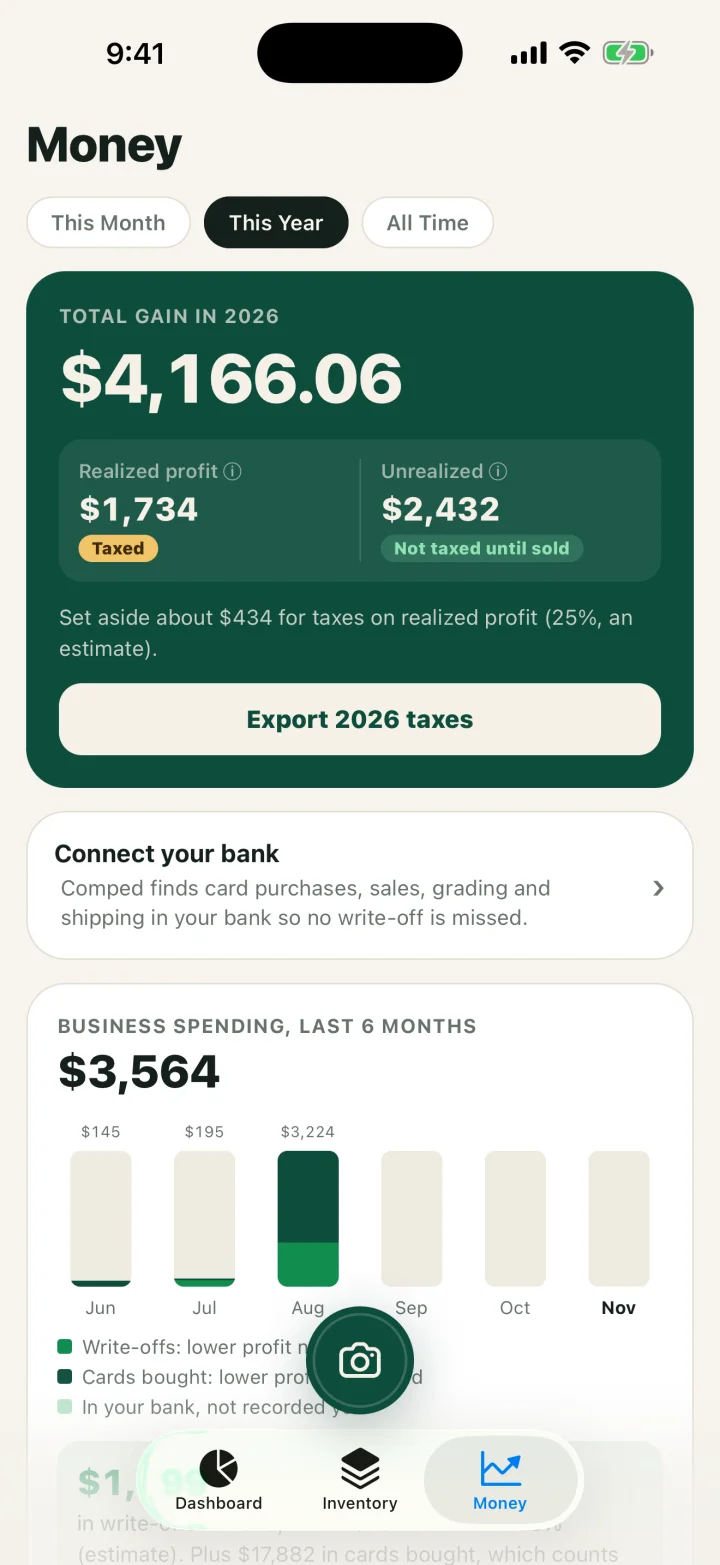
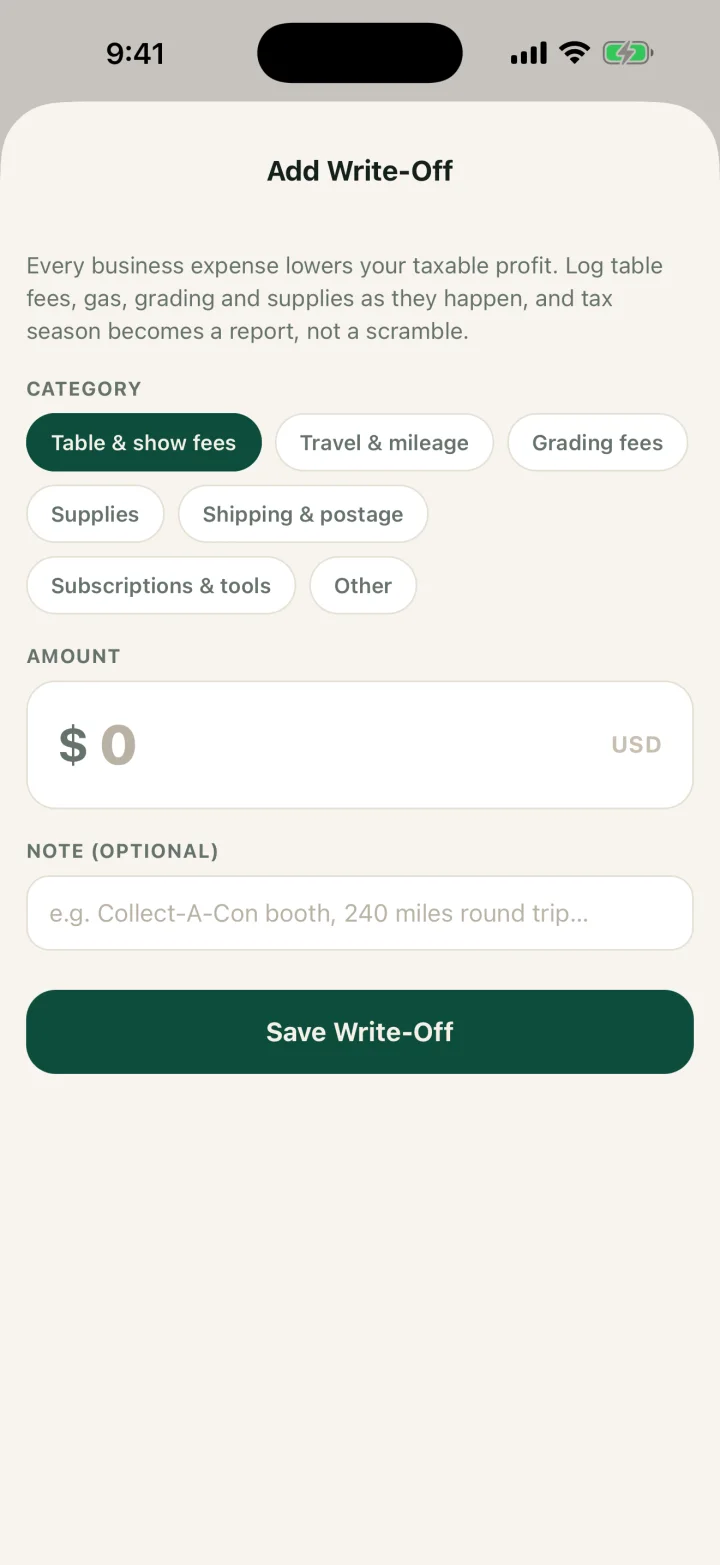
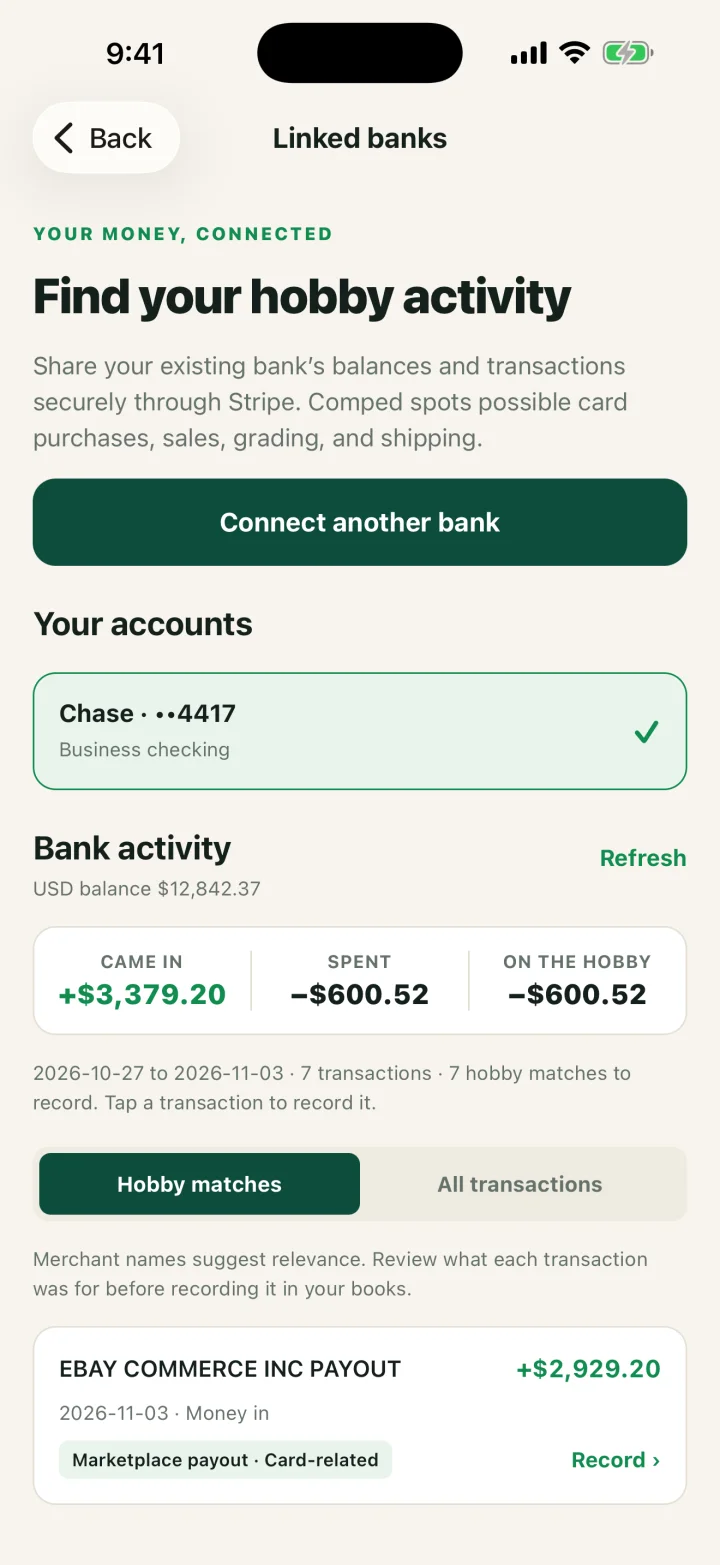
These are three screens from the iPhone app, with demo data. The Money tab shows the year's realized profit, a 25% set-aside estimate, and the "Export 2026 taxes" button, which produces a CSV with a Schedule C style summary. The Add Write-Off screen files a cost under a category such as table and show fees or grading fees. On Comped Pro, a linked bank account lists transactions that look card related, so the card account and the books agree.
Related guides
- The Card Vendor's Master Guide to Taxes: Schedule C, self-employment tax and estimates, LLC or not.
- Card Show Sales Tax Index 2026: the registration each of the 46 sales tax states asks for before a show.
- How to become a card show vendor: the filings in order, from first table to first return.
- Hobby or business when you sell cards: the question that decides which form your profit goes on.
- Do you have to pay taxes on selling sports cards?: the tax that does not change when you form an LLC.
- The 1099-K for card sellers in 2026: which name and number the platforms report under.
FAQ
Do I need an LLC to sell sports cards or Pokemon cards?
No. You become a sole proprietor the moment you sell for profit, and that is a legal way to sell. What you need is a sales tax registration where you sell in person, records of your buys and sales, and a Schedule C with your return.
Do I need a business license to sell cards at a card show?
What most states require is a sales tax registration: 35 of 46 sales tax states want it before one show. A general business license is a separate, local question that depends on your city and county. No federal licence covers reselling trading cards.
Will an LLC lower my taxes?
Not by itself. A single-member LLC is taxed exactly like a sole proprietor: Schedule C and 15.3% self-employment tax on net earnings of $400 or more. An S corporation election is a separate decision that adds payroll and a second return, and it only pays once profit is well into five figures.
Do I need an EIN to sell cards?
No, a sole proprietor with no employees can use a Social Security number. Get one anyway. It is free from the IRS, issued immediately online, and it keeps your SSN off the W-9s that dealers and promoters ask for.
How do I fill out a W-9 if I have a single-member LLC?
Put your own name on line 1 and the LLC's name on line 2. On line 3a tick Individual/sole proprietor, not the LLC box, which is for LLCs taxed as corporations or partnerships. In Part I enter your SSN or your own EIN, as the form's instructions say.
Can I sell under a business name without an LLC?
Yes. A sole proprietor can register a trade name, often called a DBA or fictitious name, with the state or county. The SBA says a DBA gives no legal protection by itself. It only lets you trade under that name.
Do I still have to file a BOI report for my LLC?
No. FinCEN exempted US companies from beneficial ownership reporting. The interim final rule came in March 2025 and the final rule became effective 14 August 2026. Older guides describing the report are out of date for domestic companies.
What does it cost to form an LLC?
Roughly $50 to $500 to file, depending on the state, plus any annual report fee. New Jersey is $100 plus a $75 annual report. New York is $200 plus a $50 certificate of publication and the newspaper costs, and Pennsylvania is $125 plus a $7 annual report. Figures checked November 2026.
SOURCES
- Single member limited liability companies, IRS, checked November 2026.
- Form W-9 (Rev. March 2024) and its instructions, IRS, checked November 2026.
- Instructions for Schedule C (Form 1040), 2025, IRS, checked November 2026.
- Schedule C (Form 1040), 2026, IRS, checked November 2026.
- Get an employer identification number, IRS, checked November 2026.
- Instructions for Form SS-4 (Rev. December 2025), IRS, checked November 2026.
- Self-employment tax (Social Security and Medicare taxes), IRS, checked November 2026.
- S corporations, IRS, checked November 2026.
- S corporation compensation and medical insurance issues, IRS, checked November 2026.
- Choose a business structure, U.S. Small Business Administration, checked November 2026.
- Apply for licenses and permits, U.S. Small Business Administration, checked November 2026.
- Beneficial Ownership Information Reporting, FinCEN, checked November 2026.
- Registry fee schedules, New Jersey Division of Revenue and Enterprise Services, checked November 2026.
- Vendors and promoters, New Jersey Division of Taxation, checked November 2026.
- Articles of Organization for Domestic Limited Liability Company, New York Department of State, checked November 2026.
- Certificate of Publication for Domestic Limited Liability Company, New York Department of State, checked November 2026.
- Fees and Payments, Pennsylvania Department of State, checked November 2026.
This is general information for card sellers, not tax or legal advice for your situation. Rules change and states differ; a CPA who knows your numbers wins every time.