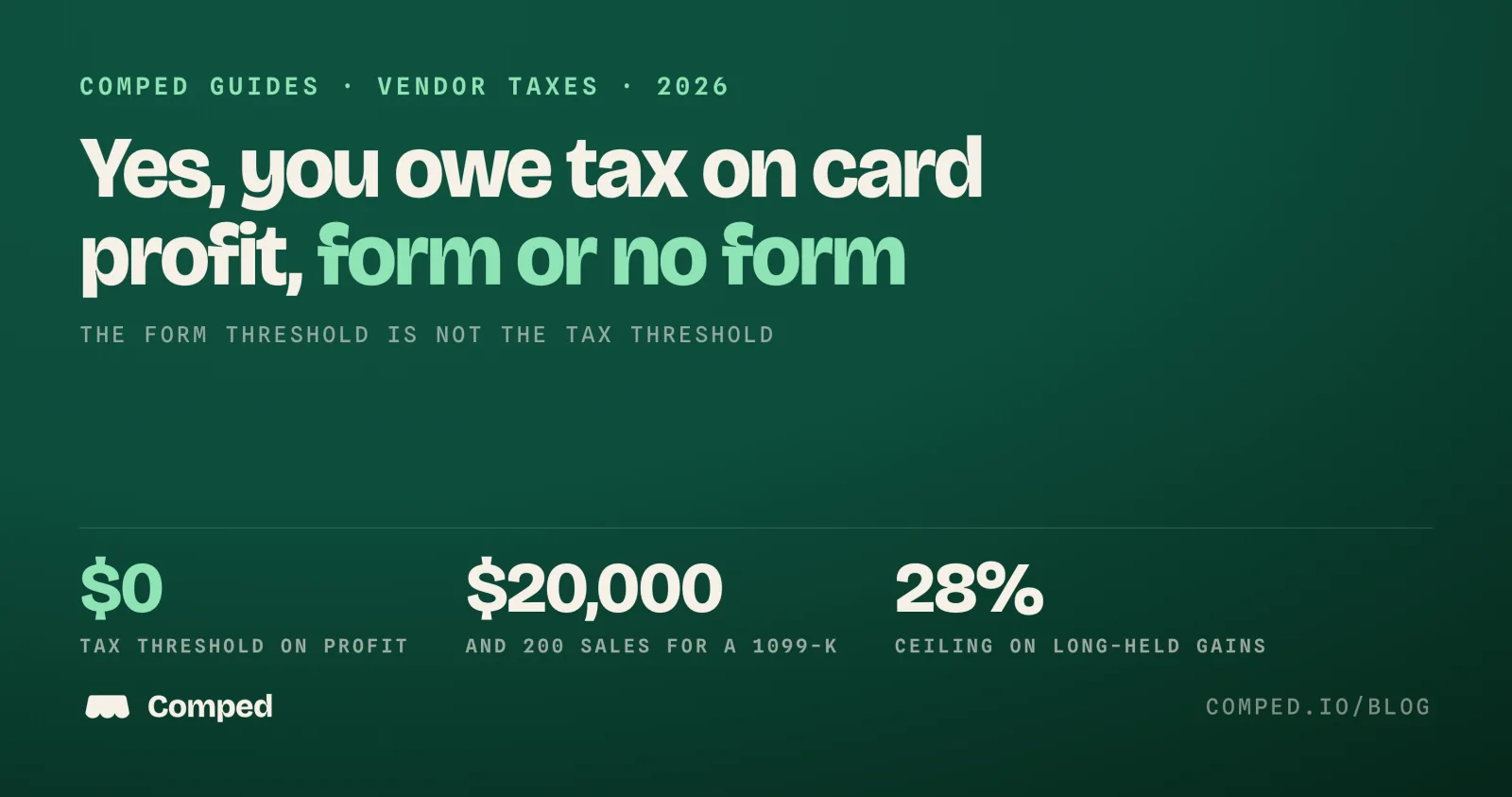
Is the whole sale taxed, or only the profit?
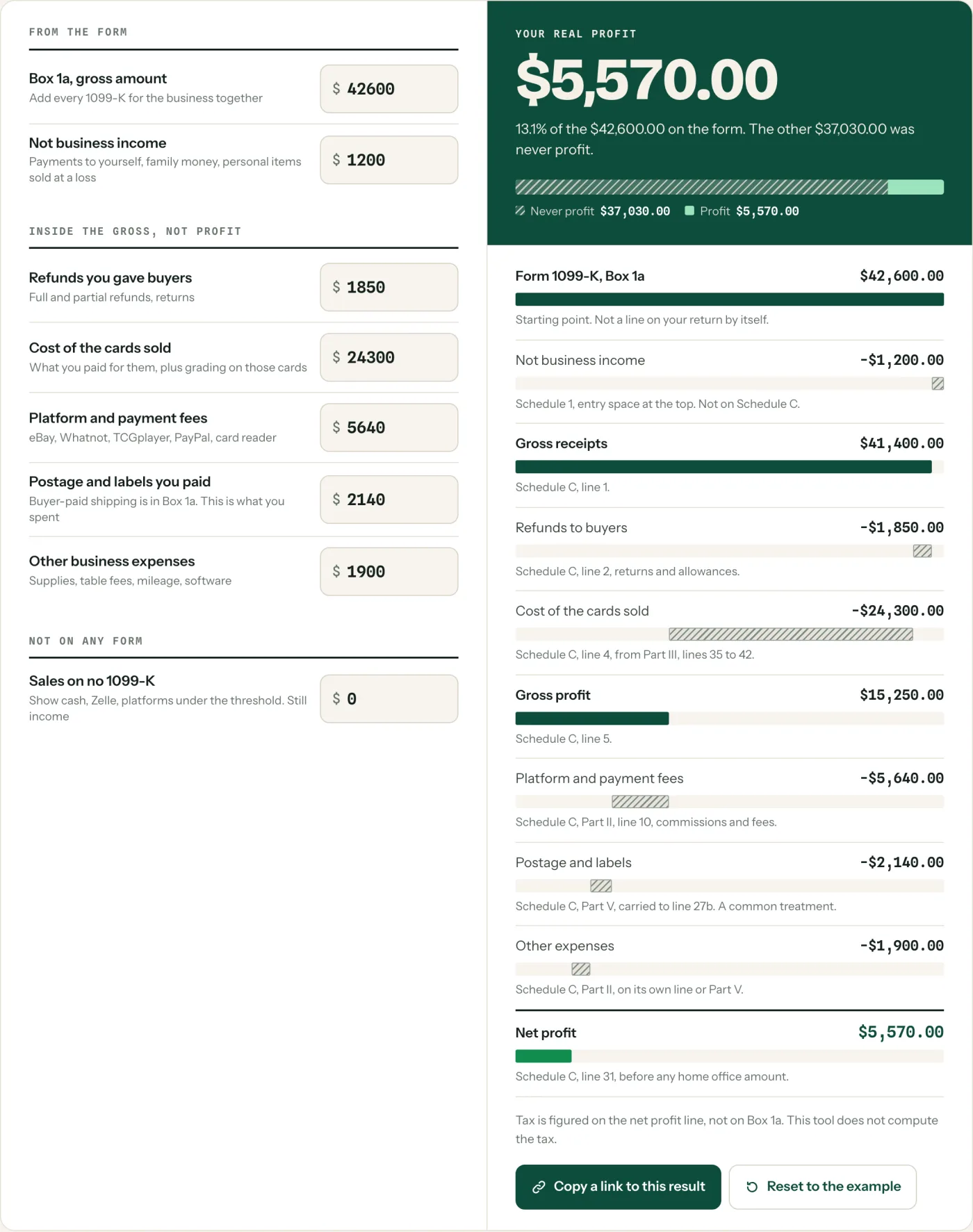
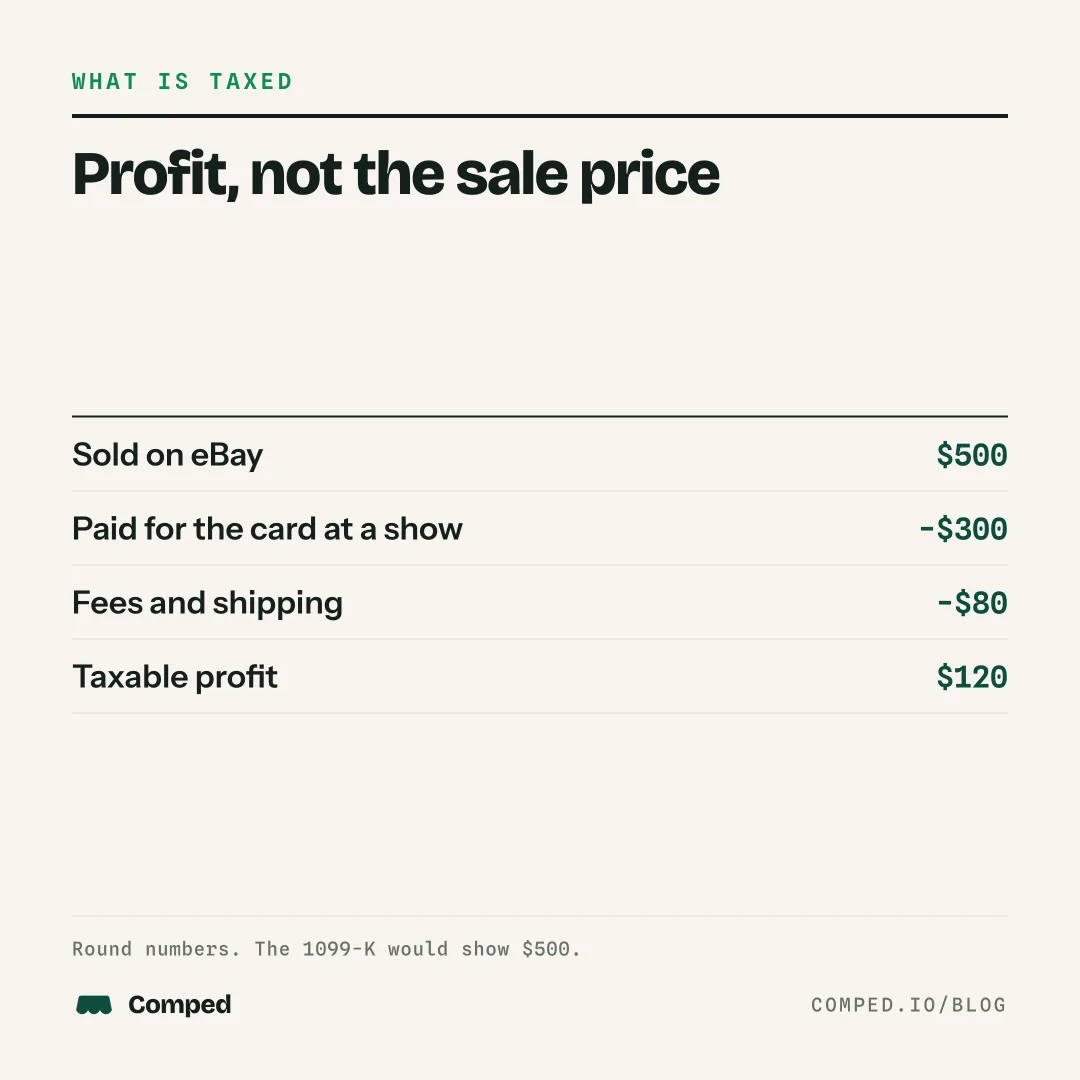
Only the profit is taxed. The IRS taxes what you cleared, not what the buyer paid. The IRS 1099-K FAQs say the gross figure on the form is not adjusted for fees, credits, refunds, shipping or discounts. You deduct those yourself. What the card cost you comes off first, then the costs of the sale: platform fees, payment fees, shipping labels.
THREE LINES, WORKED
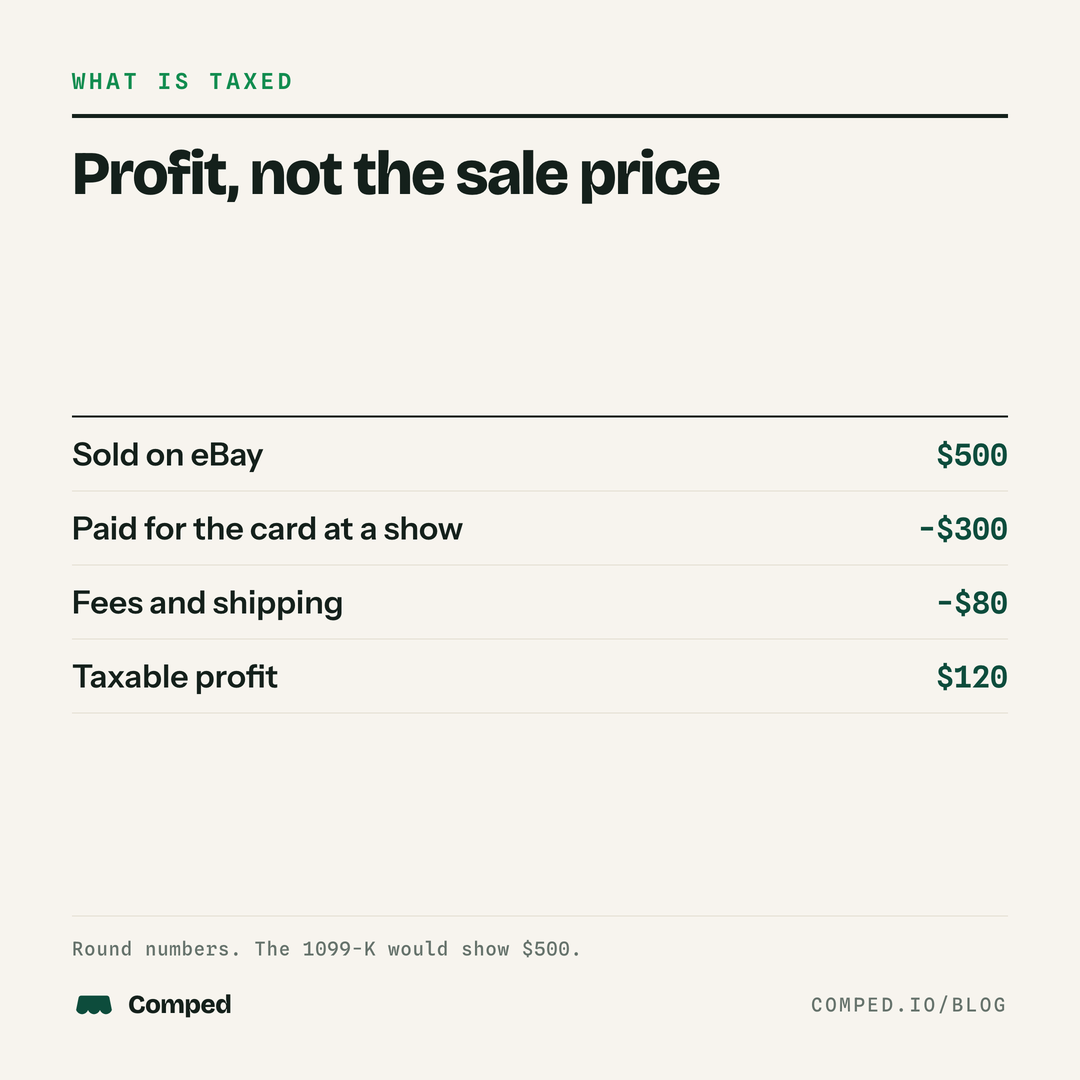
Say you sold a card on eBay for $500. These are round numbers, not a real deal.
The $120 is taxed, not the $500. The $300 is the card's cost basis, the figure sellers most often fail to write down. The master tax guide covers inventory methods and cost of goods sold in depth. To test one sale on any platform, the card profit calculator applies that platform's fees for you.
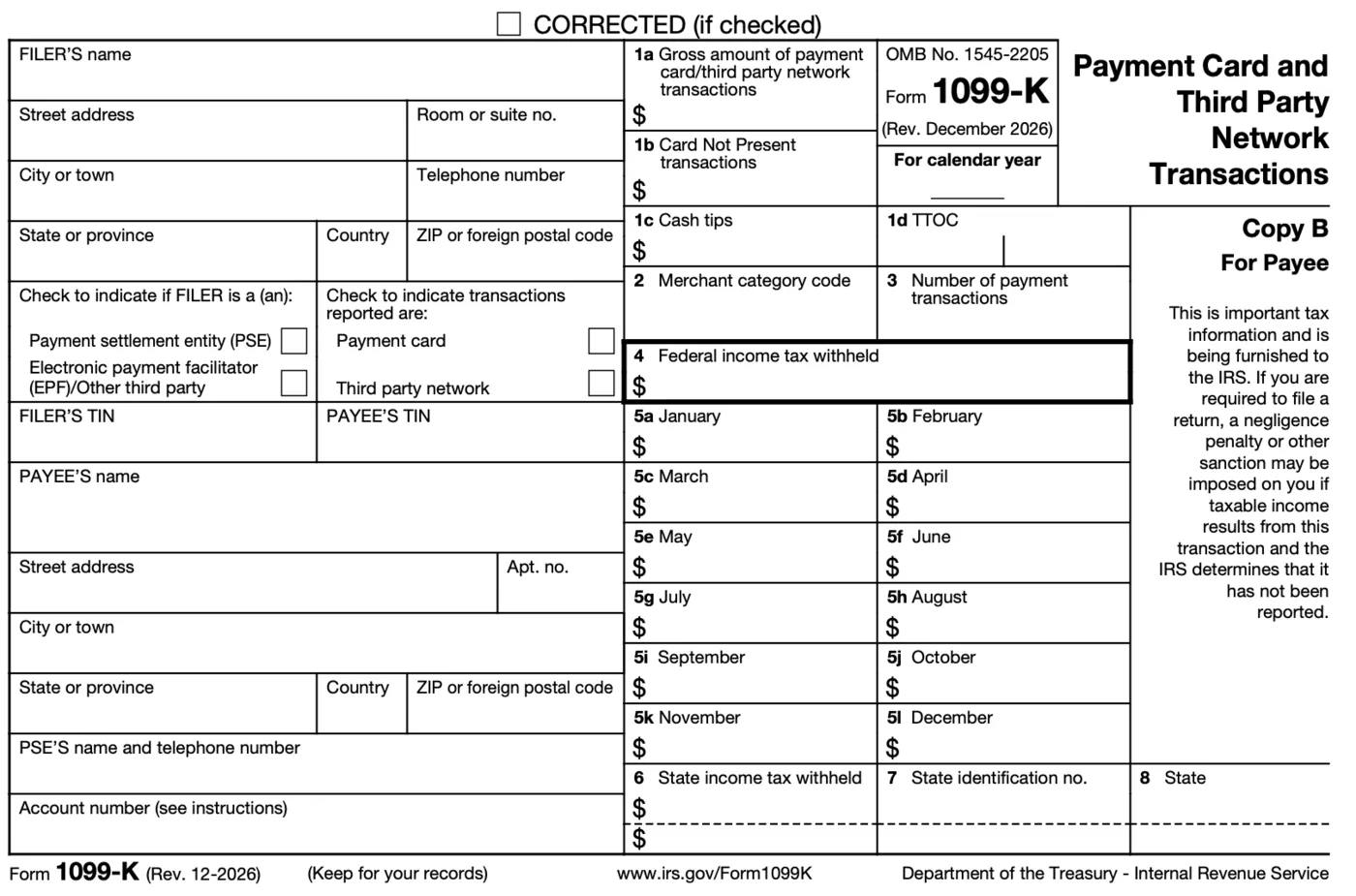
If a form did arrive, work down from Box 1a to the profit line by line. The 1099-K reconciliation calculator does that and names the Schedule C line for each subtraction.
Dealer, investor or collector: which one are you?
The form you file and the rate you pay depend on which of four sellers the IRS sees when it looks at your cards. You do not pick the label. The facts of how you buy and sell pick it.
| You are a | Form | Rate on gains | What you can subtract | Losses | SE tax |
|---|---|---|---|---|---|
| Dealer (buys to resell) | Schedule C and Schedule SE | Ordinary rates, any holding period | Card cost, fees, shipping, table fees, mileage, supplies, grading | Deductible against other income | 15.3% |
| Investor (holds for appreciation) | Form 8949 and Schedule D | Held over a year: your rate, up to a 28% ceiling. A year or less: ordinary rates | Card cost | Capital losses, against capital gains, then up to $3,000 a year against other income | None |
| Collector (holds for enjoyment) | Form 8949 and Schedule D | Same as an investor | Card cost | Not deductible. Personal-use property | None |
| Hobby seller (sells often, no profit motive) | Schedule 1, line 8 | Ordinary rates | Cost of goods sold only | Not deductible | None |
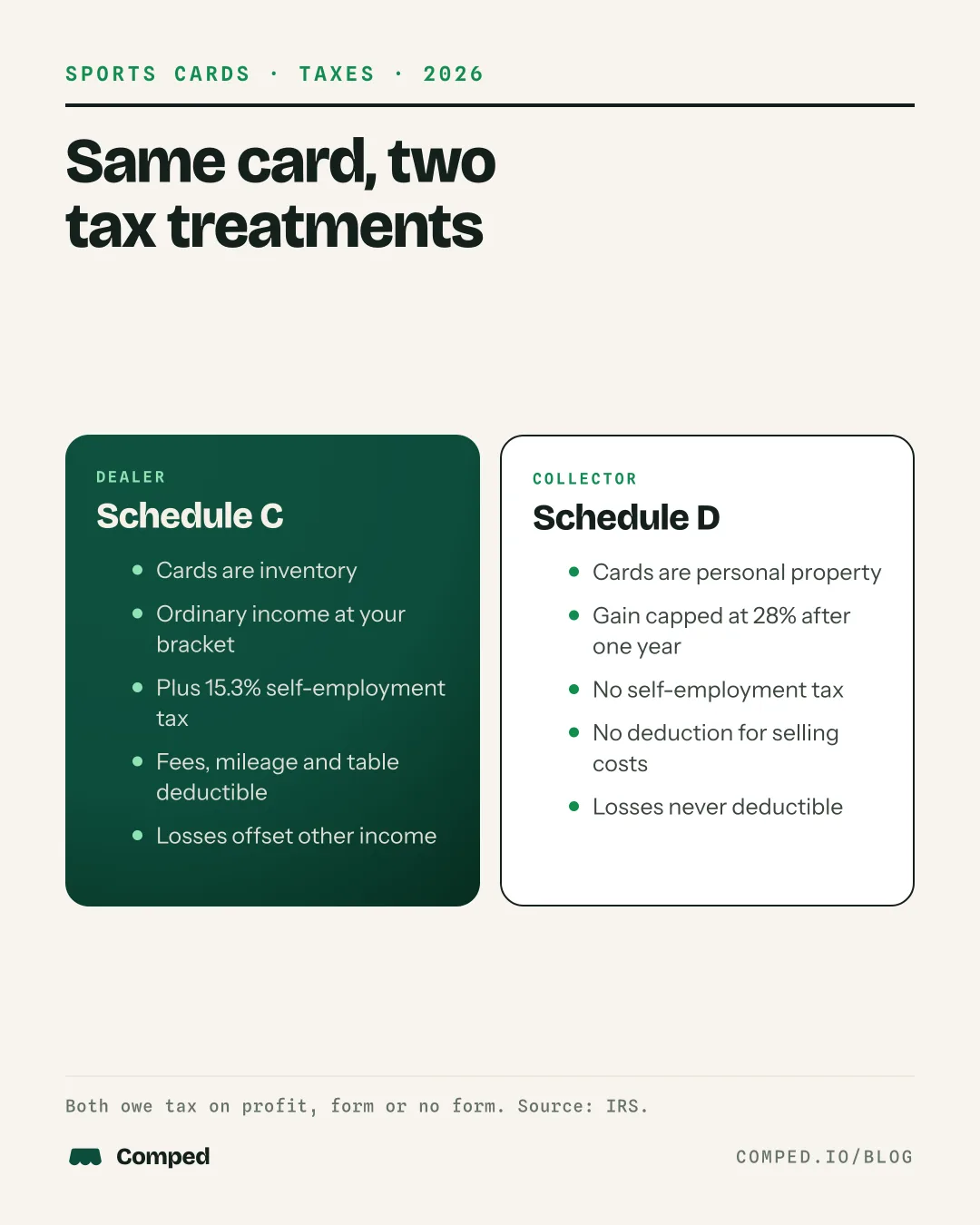
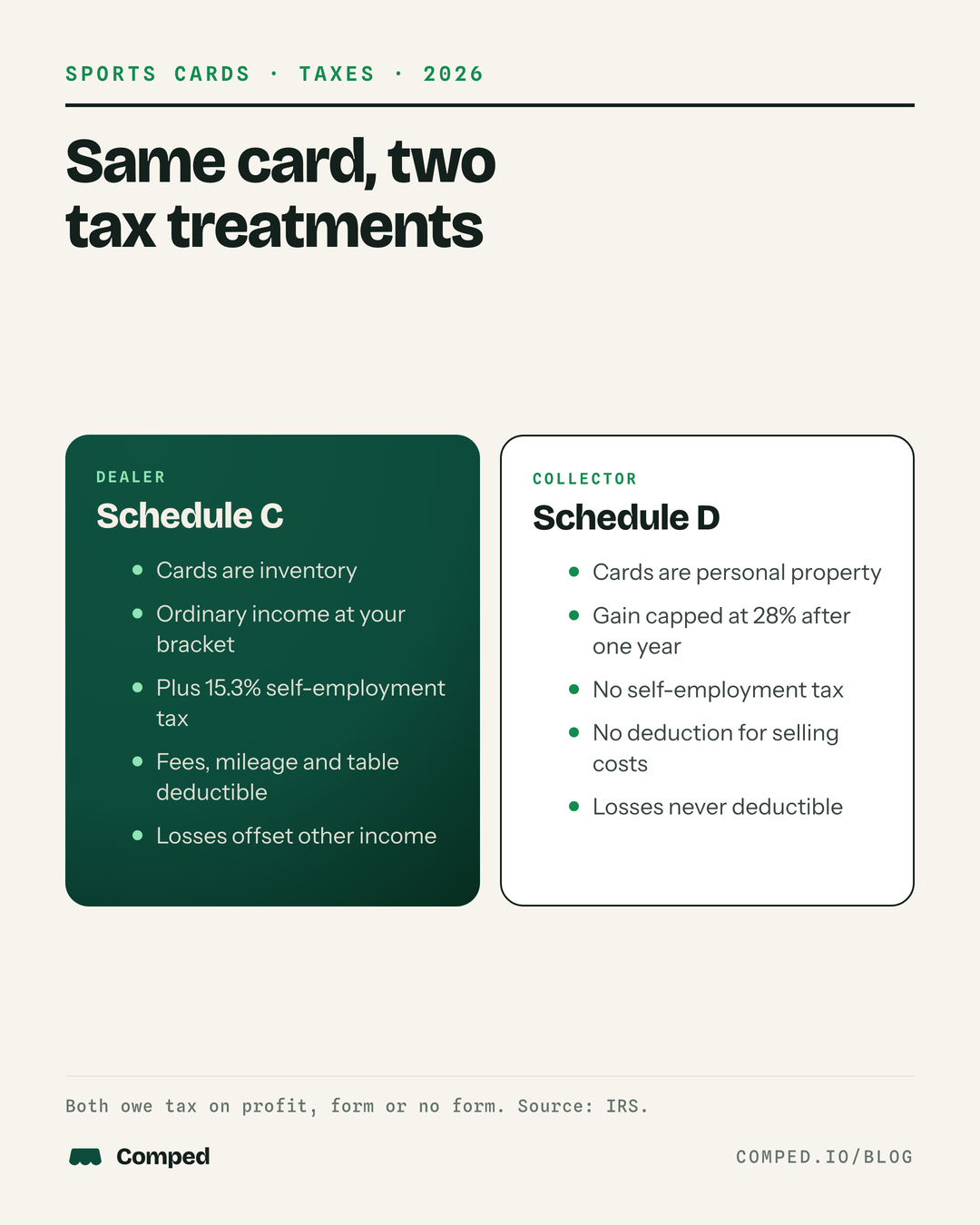
A dealer buys cards to resell them. The cards are inventory and every sale is ordinary income on Schedule C. Self-employment tax of 15.3% applies once net earnings reach $400 for the year.
An investor holds cards for appreciation, and a collector holds them for enjoyment. Both report each sale as a capital gain. The difference is the loss: Tax Topic 409 says a loss on personal-use property is not deductible. In our reading, one person can be two of these at once, a dealer in the show inventory and a collector in the binder at home, if the two are kept apart on paper.
What is the 28% collectibles rate, and who pays it?
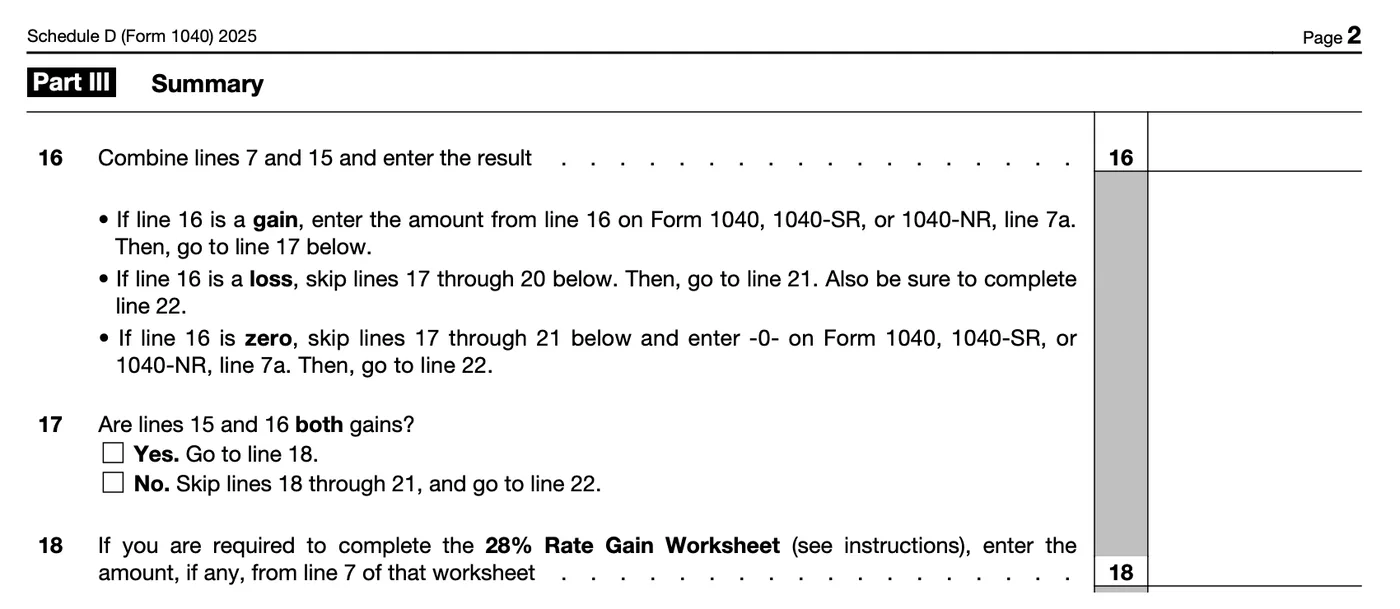
The 28% is a maximum federal rate on long-term gains from collectibles, and only investors and collectors can use it. Tax Topic 409 puts it this way: net capital gains from selling collectibles are taxed at a maximum 28% rate. It is a ceiling. A seller in the 22% bracket pays 22%, and a seller in the 35% bracket pays 28%.
The card must be held more than one year. A card sold a year or less after you bought it is a short-term gain, taxed at ordinary rates with no ceiling. A dealer never gets the ceiling, because inventory is not a capital asset.
No statute or ruling names trading cards. The Schedule D instructions list works of art, rugs, antiques, metals, gems, stamps, coins, alcoholic beverages and "certain other tangible property". Treating cards as collectibles is how preparers report them in practice. That is our reading too.
Two more things sit on top. High earners may owe the 3.8% net investment income tax on card gains once modified adjusted gross income passes $200,000 single or $250,000 joint. It does not apply to income from an active business. Most states also tax the profit as income, at their own rates.
What does a part-time dealer's year look like on paper?
Sales come first, then the cost of the cards sold, then expenses, and tax is figured on what is left. The numbers below are an example, not a real seller. The seller has a job and is in the 22% bracket.
A DEALER'S YEAR, EXAMPLE NUMBERS
No platform passed $20,000 and 200 transactions, so no 1099-K arrived. All of it is reported anyway.
Self-employment tax is figured on 92.35% of the net profit, per Schedule SE line 4a. That is $3,100 x 0.9235 = $2,862.85, and $2,862.85 x 15.3% = $438.02. Half of it, $219.01, is deducted before income tax. Income tax at 22% on the remaining $2,880.99 is $633.82. The total is about $1,071.84, before any qualified business income deduction, which can lower it.
Now treat the same year as a hobby. Cost of goods sold still comes off, but the $4,100 of expenses does not. The taxable amount is $7,200, and 22% of that is $1,584.00. The hobby label costs this seller $512.16 more. The 2026 mileage rates are from the IRS standard mileage rates: 72.5 cents through June 30 and 76 cents from July 1. Run your own figures in the card sale tax calculator.
Is selling a childhood, inherited or gifted collection taxable?
Yes, when the cards sell for more than your basis, and the basis rule differs for each. The gain is a capital gain. Held more than one year, it is taxed at your rate up to the 28% ceiling. A sale below basis is a personal loss and gives you no deduction.
| How you got the cards | Your basis | What to keep |
|---|---|---|
| Bought them yourself, years ago | What you paid | Anything that shows the year and the price: receipts, old price guides, a parent's records |
| Inherited them | Fair market value on the date of death, or the alternate valuation date if the estate chose one | An appraisal or dated sales of the same cards near that date |
| Received them as a gift | Generally the giver's basis. If the cards were worth less than that when given, the value at the gift date is used to figure a loss | What the giver paid, in writing, and the gift date |
The inherited and gift rules are in Publication 551 (revised December 2025). An inherited collection sold soon after the death often shows little gain, because the basis is the value at death.
Cards bought 20 years ago come with no receipts, so document what you can. The IRS can assert a basis of zero, which taxes the entire sale price. Card sales with no receipts covers the reconstruction. For pack pulls, the cost basis calculator splits a box or a lot across its cards.
A 1099-K can still arrive for personal cards sold at a loss. The IRS says to report the amount at the top of Schedule 1 or on Form 8949, even though the loss is not deductible. The reported income then nets to zero.
Hobby or business, who decides?
The IRS decides, from how you behave. Its hobby-or-business test weighs how you keep books, the time you put in, whether you depend on the income, and your history of profit. Under section 183(d), a profit in 3 of 5 consecutive years presumes you are a business. Receiving a 1099-K does not make you a business, and not receiving one does not make you a hobby.
The hobby label is the worst result for anyone with real selling costs, as the worked year above shows. Hobby income is reported on Schedule 1. Since the July 2025 law made section 67(h) permanent, hobby expenses cannot be deducted. Hobby or business when you sell cards walks through each factor with card examples.
Do I owe tax if I never got a 1099?
Yes, and nothing about the math changes. The IRS puts it in one sentence: all income, no matter the amount, is taxable even if you do not get a Form 1099-K. The July 2025 law reinstated the old form threshold for 2025 taxes onward. Marketplaces and payment apps file only when gross payments exceed $20,000 and more than 200 transactions, per platform.
That is a reporting rule, not a tax rule. Reporting eBay sales under $20,000 covers that case alone. Four details were rechecked on November 13, 2026.
- Some states get a form at lower amounts. State sources say $600 in Massachusetts, Virginia, the District of Columbia and Montana, $2,500 in Arkansas, and more than $1,000 with 4 or more transactions in Illinois. Platforms report a $1,000 New Jersey threshold. For Vermont and Maryland the sources conflict between $600 and $2,000 for 2026 sales. Every row is in the state 1099-K threshold table.
- Card readers follow a different rule. The IRS says payment card transactions have no threshold. Square's help page says that for 2025 and beyond it issues a form above $20,000 and 200 transactions in most states, and may report lower amounts at its discretion. Report every card sale whether or not a form comes.
- Fanatics Collect uses the $20,000 and 200 test for tax year 2025 and forward. Its page gives January 28, 2027 as the deadline for sellers to submit requested tax documentation. That is not the date forms are issued.
- January 31, 2027 is a Sunday, so the IRS due date for 2026 forms is Monday, February 1, 2027, under the weekend rule in Publication 1099.
A consignment sale works the same way. If an auction house or a consignment site sells your card and sends no form, the sale is still yours to report, at the hammer price less its commission and your basis. The 1099-K guide for card sellers covers each platform.
How do you report it?
Dealers use Schedule C; investors and collectors use Form 8949 and Schedule D; hobby sellers use Schedule 1. The form follows the classification in the table above, not the platform you sold on. Investors and collectors list each card on Form 8949: date acquired, date sold, proceeds and basis.
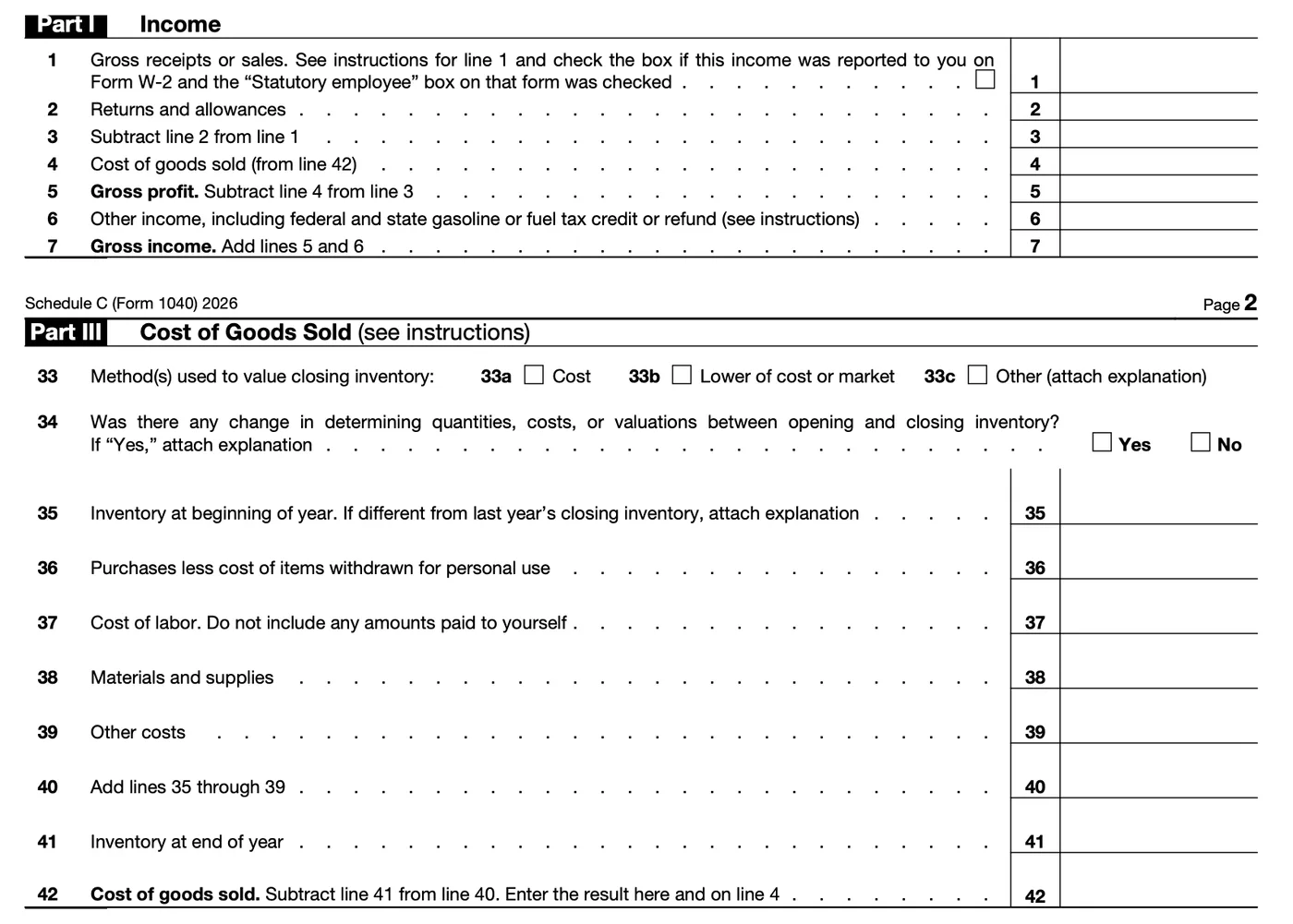
For a dealer, the steps run in this order.
- Add every sale from every channel, cash included. That total is line 1.
- Put refunds you gave buyers on line 2.
- Work out the cost of the cards you sold in Part III. Purchases go on line 36, less any cards you moved to your personal collection.
- List expenses in Part II: fees on line 10, mileage on line 9, supplies on line 22.
- Carry net profit from line 31 to Schedule SE.
A dealer expecting to owe $1,000 or more for 2026 also pays estimated taxes quarterly. The 2026 dates are April 15, June 15, September 15, 2026 and January 15, 2027. Quarterly estimated taxes for card sellers has the safe harbor math.
What about card shows, breaks, trades and grading?
Each one is taxed by the same rule, profit over basis, with one detail of its own.
- Card show cash is income like any other sale. Nobody sends a form for it, and it goes on line 1 with the rest. Sales tax is a separate, state matter: in the Card Show Sales Tax Index, 35 of 46 sales tax states require registration before one show.
- Trades are barter. Under Tax Topic 420, the fair market value of the card you receive is income in the year you receive it, and that value is the new card's basis. The card trade calculator works out both sides, cash included.
- Break spots are purchases. A buyer's basis is what the spot cost, spread across the cards kept and sold. That is the reasonable method; no IRS ruling covers it. A breaker who sells spots is running a business.
- Grading fees have no IRS guidance. Our reading: for a dealer the fee is part of the card's cost, recovered when the card sells. A $20 raw card with a $25 fee, sold at $120, has a basis of $45 and a profit of $75. See are PSA grading fees tax deductible.
Which mistakes cost the most, and how do you fix one already made?
The costly mistakes all come from mixing up the form and the tax. If a past return has one, Form 1040-X corrects it.
| Mistake | What it costs |
|---|---|
| Reporting Box 1a as income with nothing subtracted | Tax on the whole sale price. On the $500 card above, tax on $500 where $120 was owed |
| Leaving out sales because no 1099-K came | The tax, interest, and a 20% accuracy-related penalty on the understatement |
| No record of what the cards cost | The IRS can treat basis as zero and tax the full price |
| Filing as a hobby with real expenses | Every expense except cost of goods sold is lost. $512.16 in the worked year above |
To fix a filed return, Tax Topic 308 says to use Form 1040-X. To claim a refund, file it within 3 years of the date you filed the original return, or 2 years of the date you paid the tax, whichever is later. If the fix means you owe more, file it and pay the difference; a CPA can tell you what interest applies.
Which records do you need?
A record of what each card cost you, made when you bought it. Publication 583 lists what substantiates a purchase: canceled checks, register tapes, account statements, card slips, invoices and petty cash slips for small cash payments. At a show, that means a written receipt with the seller's name, the date, the card and the price, for cash buys and trades alike.
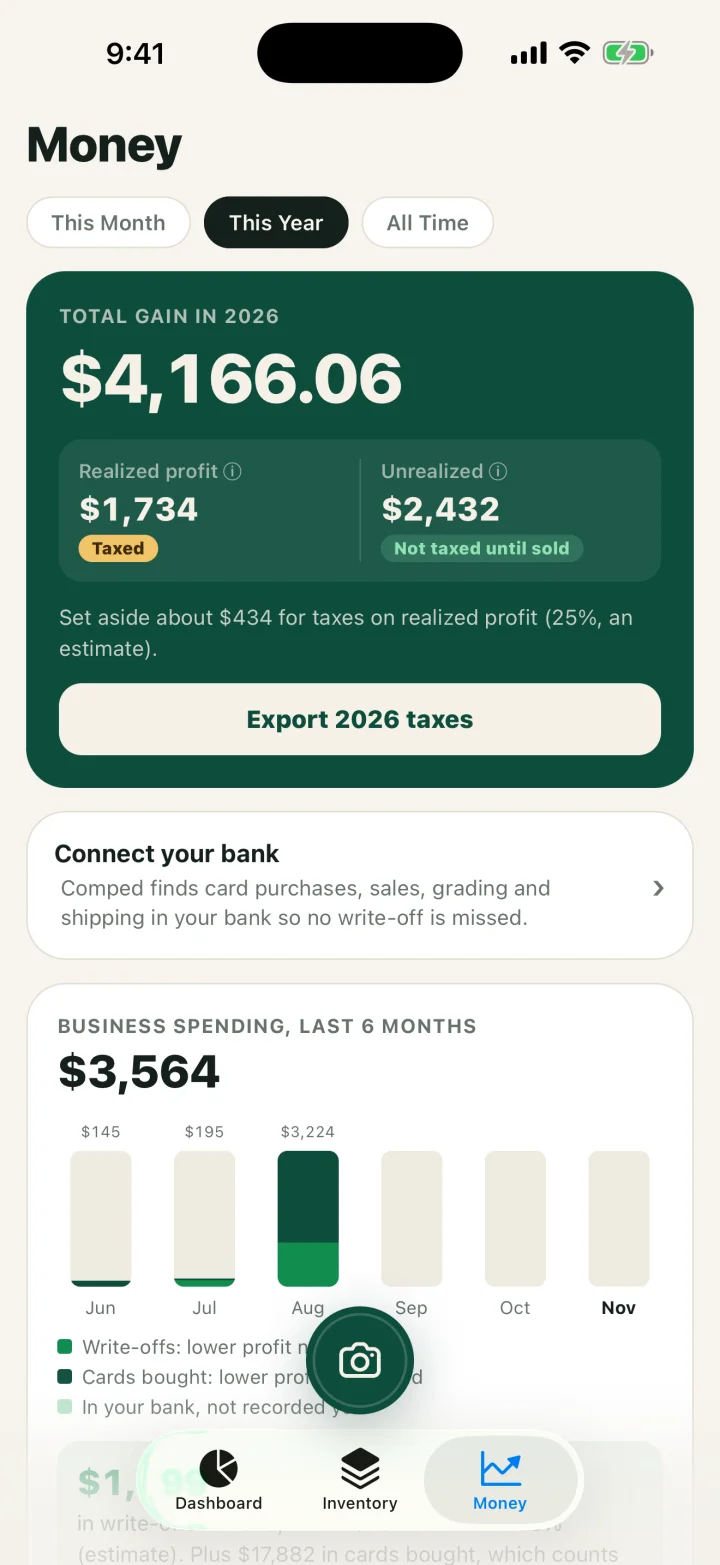
Comped records what you paid, what the card sold for, the fees and the shipping on each card, and its Money tab exports the year as a CSV with a Schedule C style summary. Keep the records 3 years, 6 years if you under-reported income by more than 25%, and indefinitely for any year you did not file.
How this looks in the Comped app
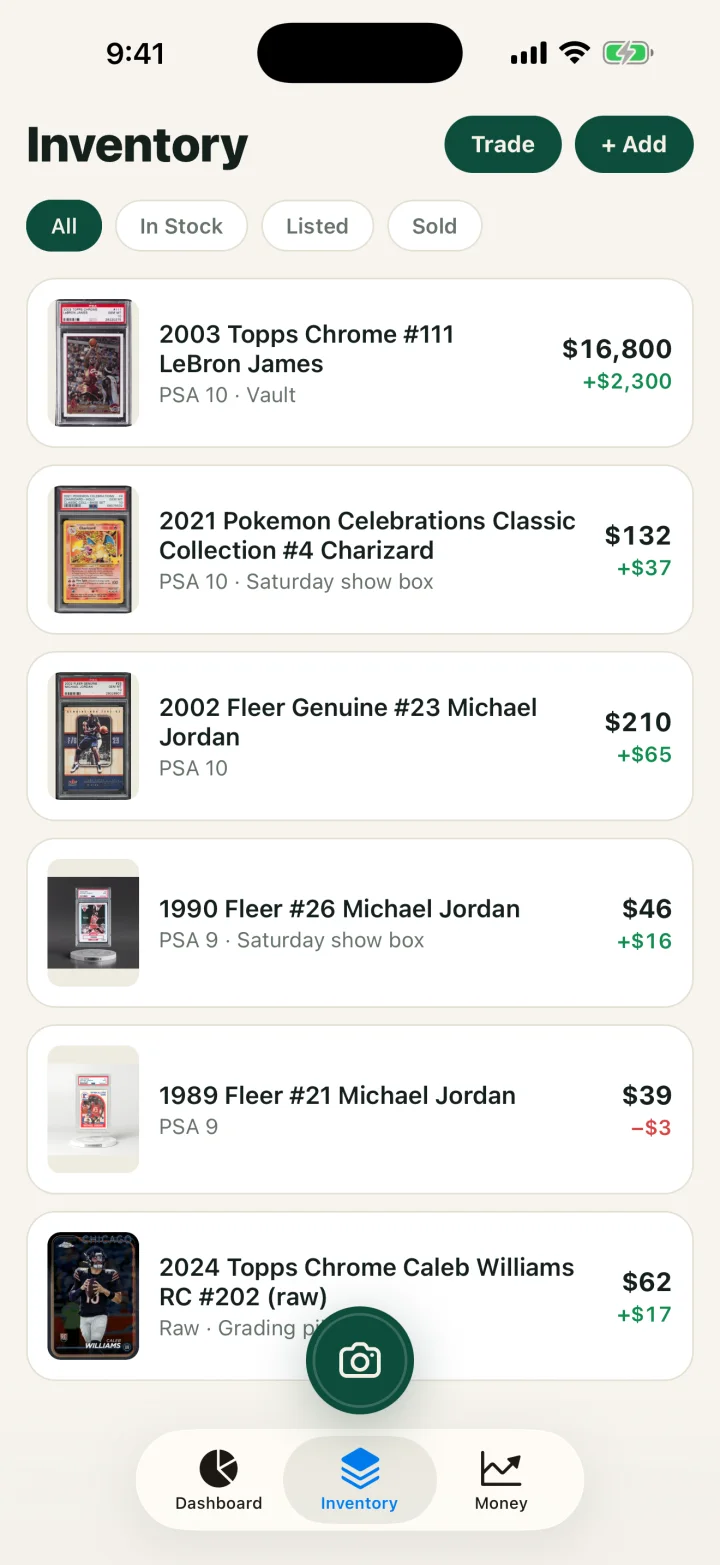
The first screen breaks one sale into price, fees, shipping, cost basis and profit. The second is the Money tab for the year, with realized profit apart from unrealized gain and the tax export. The third is inventory, each card with its value and gain over cost.

Run your own deal through the card sale tax calculator to see the tax to set aside.
Related guides
- The Card Vendor's Master Guide to Taxes: the nine hobby factors, inventory methods and the full worked deal.
- The 1099-K for card sellers in 2026: every platform's threshold and the state figures.
- Cost basis for cards bought with cash or by trade at a show: basis when there is no invoice.
- Hobby or business when you sell cards: the IRS factors with card examples.
- Selling Pokemon cards and taxes: pulls, sealed flips, breaks and slabs.
FAQ
Is it profit or the whole sale that is taxed?
The profit. You subtract what the card cost you and the costs of selling it, such as platform fees and shipping, from the sale price. A 1099-K shows the gross sale price, so you make those subtractions on your return.
Do I owe tax if I never got a 1099?
Yes. Marketplaces issue the 1099-K above $20,000 and more than 200 transactions per platform for 2025 taxes onward, but income is taxable at any amount. Cash sales at a show are taxable in the same way.
I held the card two years. Is the rate 15% or 28%?
Neither is automatic. A card held more than one year by an investor or collector is taxed at your ordinary rate, up to a 28% ceiling. The 15% rate that applies to stocks does not apply to collectibles, and 28% is a maximum, not a flat rate.
What is my basis in cards I inherited?
Generally the fair market value on the date of death, not what the original owner paid. Keep an appraisal or dated sales of the same cards from around that date. Sold soon after, an inherited collection often shows little or no gain.
What if I bought the cards 20 years ago with no receipt?
Your basis is still what you paid, but you have to support it. Write down what you remember and keep anything that shows the era's pack and box prices. If you can show nothing, the IRS can treat the basis as zero and tax the entire sale.
Can cards sold at a loss offset cards sold at a gain?
For a dealer, yes: every sale goes into one profit figure on Schedule C. For an investor, capital losses offset capital gains. For a collector selling personal cards, a loss is not deductible and does not offset the gains.
Will I be taxed at my job's bracket?
Dealer profit is ordinary income added to your wages, so it is taxed at your marginal bracket plus 15.3% self-employment tax. Long-term gains on personal cards are also taxed at your ordinary rate, but capped at 28%.
Should I just stay under the threshold?
No. The $20,000 and 200 transaction threshold decides whether a platform files a form, not whether you owe tax. Tax is owed on profit from the first dollar, and splitting sales across platforms or into cash changes nothing.
SOURCES
- IR-2025-107, Form 1099-K threshold reverts to $20,000, IRS, checked November 2026.
- Form 1099-K FAQs, general information, IRS, checked November 2026.
- What to do with Form 1099-K, IRS, checked November 2026.
- Tax Topic 409, Capital gains and losses, IRS, checked November 2026.
- Instructions for Schedule D (Form 1040), 2025, IRS, checked November 2026.
- Tax Topic 559, Net investment income tax, IRS, checked November 2026.
- Publication 551, Basis of assets, IRS, checked November 2026.
- How to tell the difference between a hobby and a business, IRS, checked November 2026.
- Tips for taxpayers who make money from a hobby, IRS, checked November 2026.
- Self-employment tax, IRS, and Schedule SE (Form 1040) 2026, checked November 2026.
- Schedule C (Form 1040) 2026, IRS, checked November 2026.
- Form 1040-ES, Estimated tax for individuals, IRS, checked November 2026.
- Tax Topic 420, Bartering income, IRS, checked November 2026.
- Tax Topic 308, Amended returns, IRS, checked November 2026.
- Publication 583, Starting a business and keeping records, IRS, checked November 2026.
- Form 1099-K overview, Square, and 1099-K forms, Fanatics Collect, checked November 2026.
This is general information for card sellers, not tax or legal advice for your situation. Rules change and states differ; a CPA who knows your numbers wins every time.